

Part 2 of the Shawarma Capital series on Iambic Therapeutics (Nasdaq: IAM). Data as of 9 November 2026.
Disclosure: I am long $IAM at an average of $9.95, bought before publishing. This is research, not a recommendation.
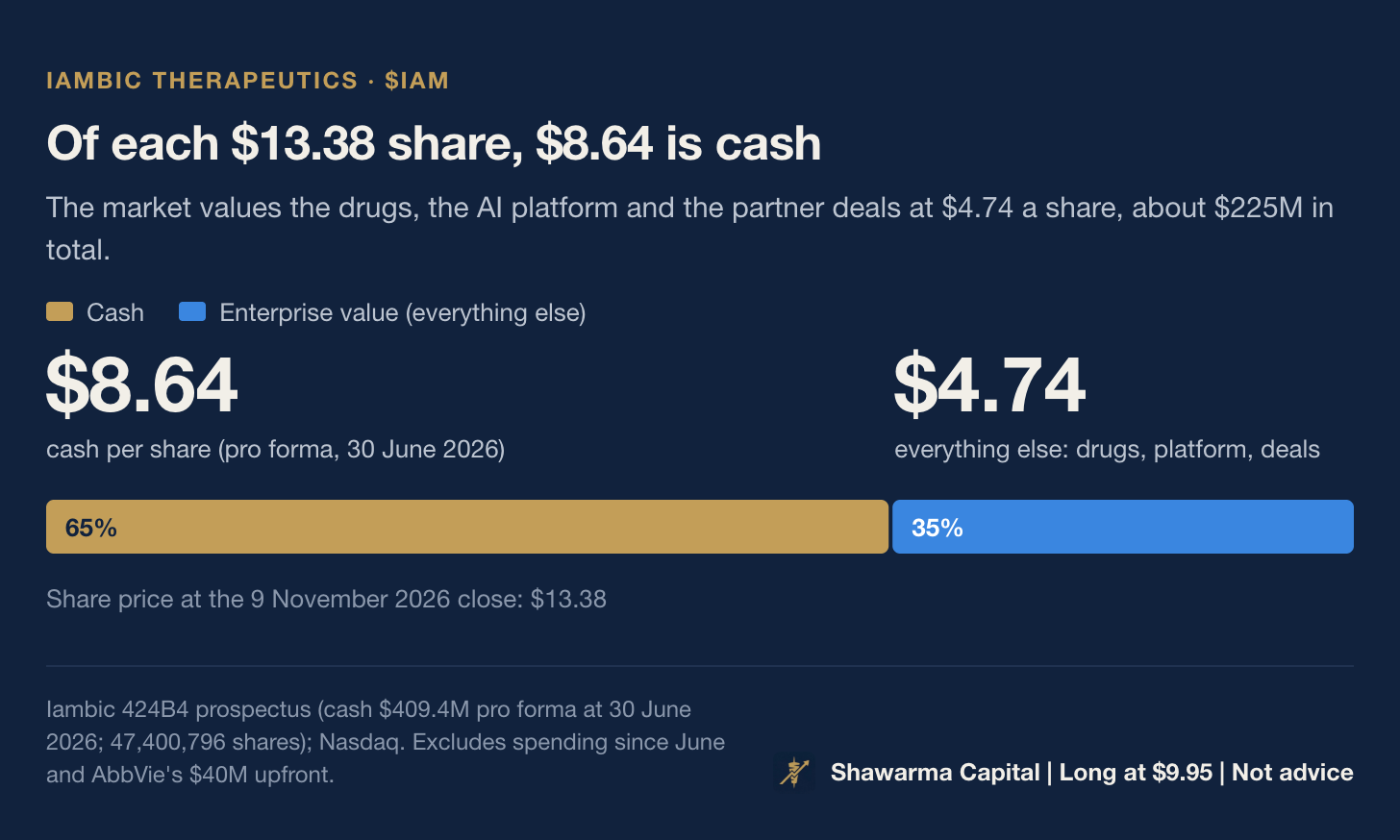
Verdict in one line: I am bullish at $13.38. About $8.64 of each share is cash, and the lead HER2 drug alone does not justify the other $4.74. The rest of what roughly $225M buys does: two more drugs, five paying partners and a company a buyer could acquire, backed by private-round and analyst prices well above today's. Below are 13 things that could prove me wrong.
IAM here is the Nasdaq ticker of Iambic Therapeutics, a San Diego drug developer, not identity and access management software.
The thesis in one minute
The price. $13.38 at the 9 November 2026 close, 16% under the $16.00 IPO (initial public offering) price of 14 October (Nasdaq).
The cash. $409.4M, or $8.64 a share, at 30 June 2026 adjusted for the IPO; the company says it lasts into late 2028 (424B4).
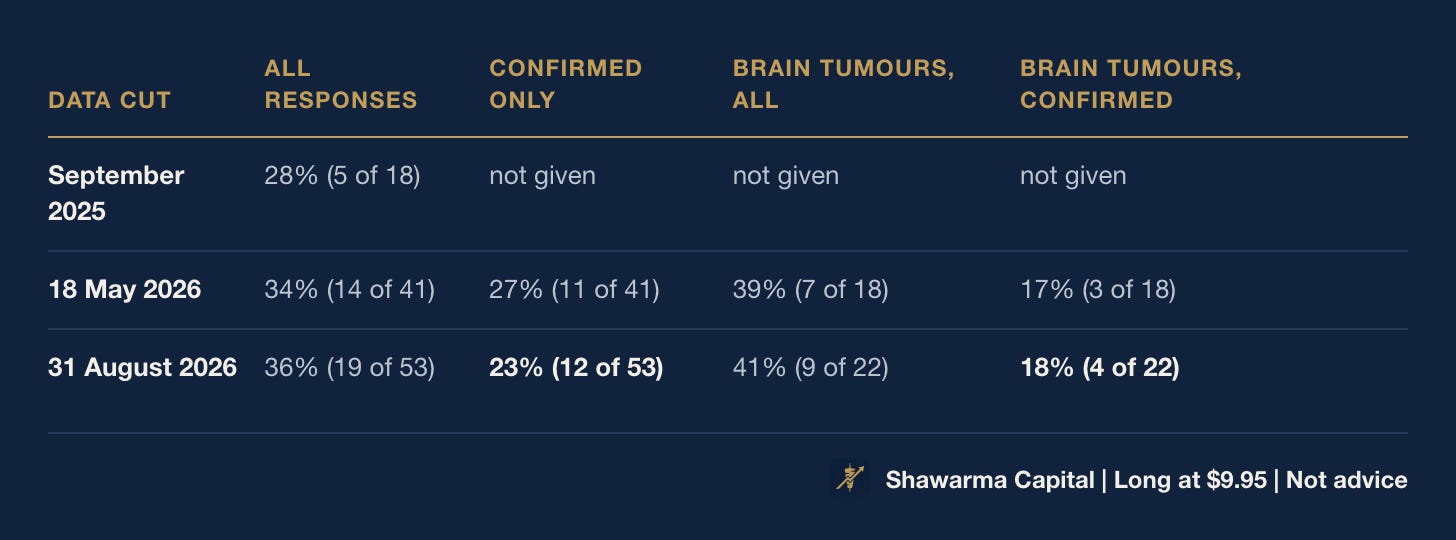
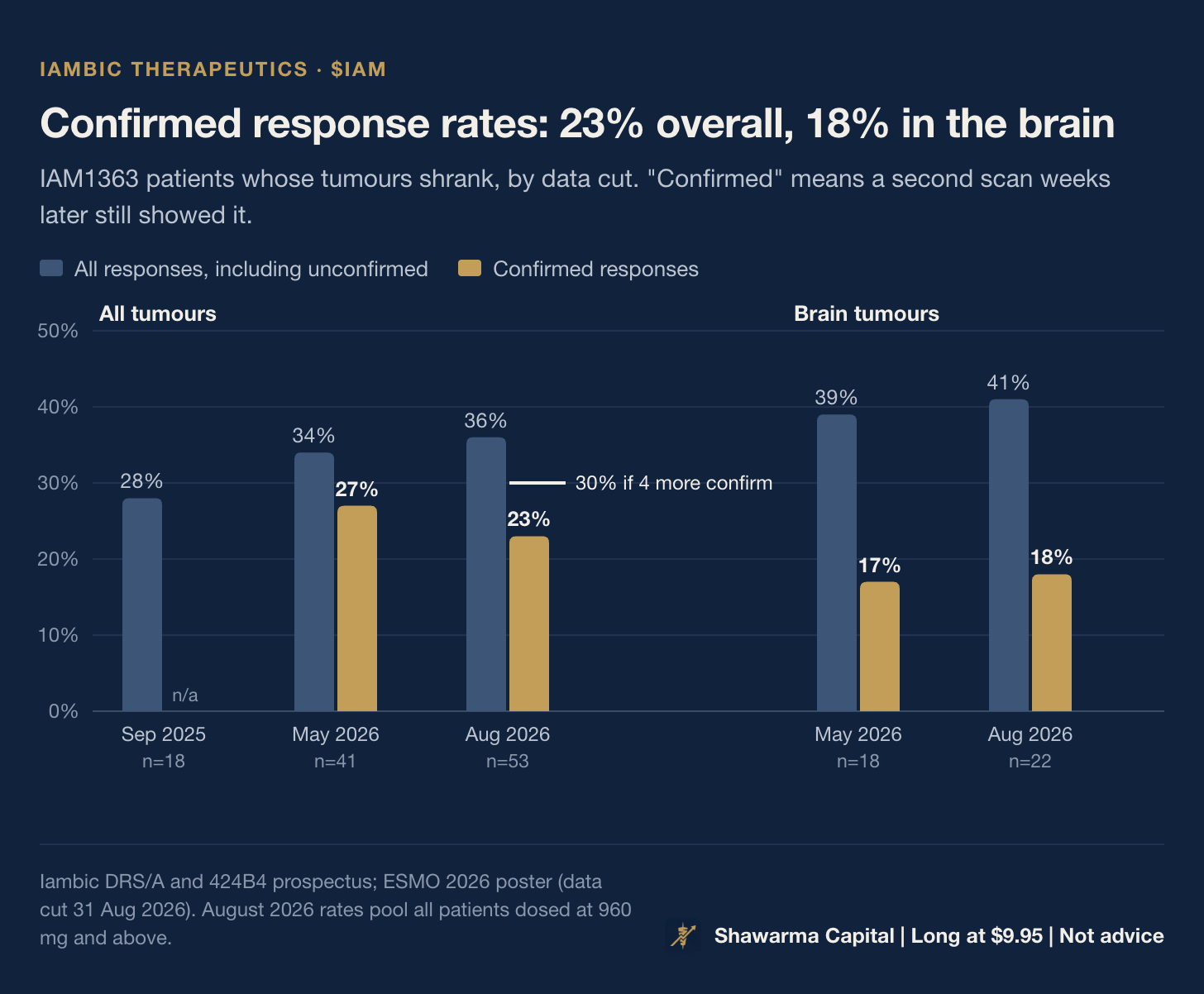
The drug. IAM1363 is a once-daily pill for cancers driven by a protein called HER2. Tumours shrank in 23% of patients on the strict, confirmed count (12 of 53), in people who had mostly run out of approved options (ESMO 2026 poster).
What the price assumes. After cash, the market values the business at about $225M. On Part 1's simple model, that needs about 52% odds that this one drug succeeds in its base case. I would not give those odds, so the HER2 drug alone does not justify the price.
Why I am long anyway. The model counts nothing for two more drugs, a platform five drug companies pay to use, or takeover value. Insiders and funds paid $16.30 to $17.14 a share between November 2025 and May 2026, and three banks set targets of $22 to $30.
What can go wrong. Enrolment runs at less than half the needed pace, bigger rivals recruit at the same hospitals, more money will be needed before the key trial finishes, and about 81.7% of shares can be sold from 13 April 2027.
IAM stock at a glance
The company is valued at $634.2M. Take away its $409.4M of cash and the market pays about $225M for the business itself: its enterprise value.
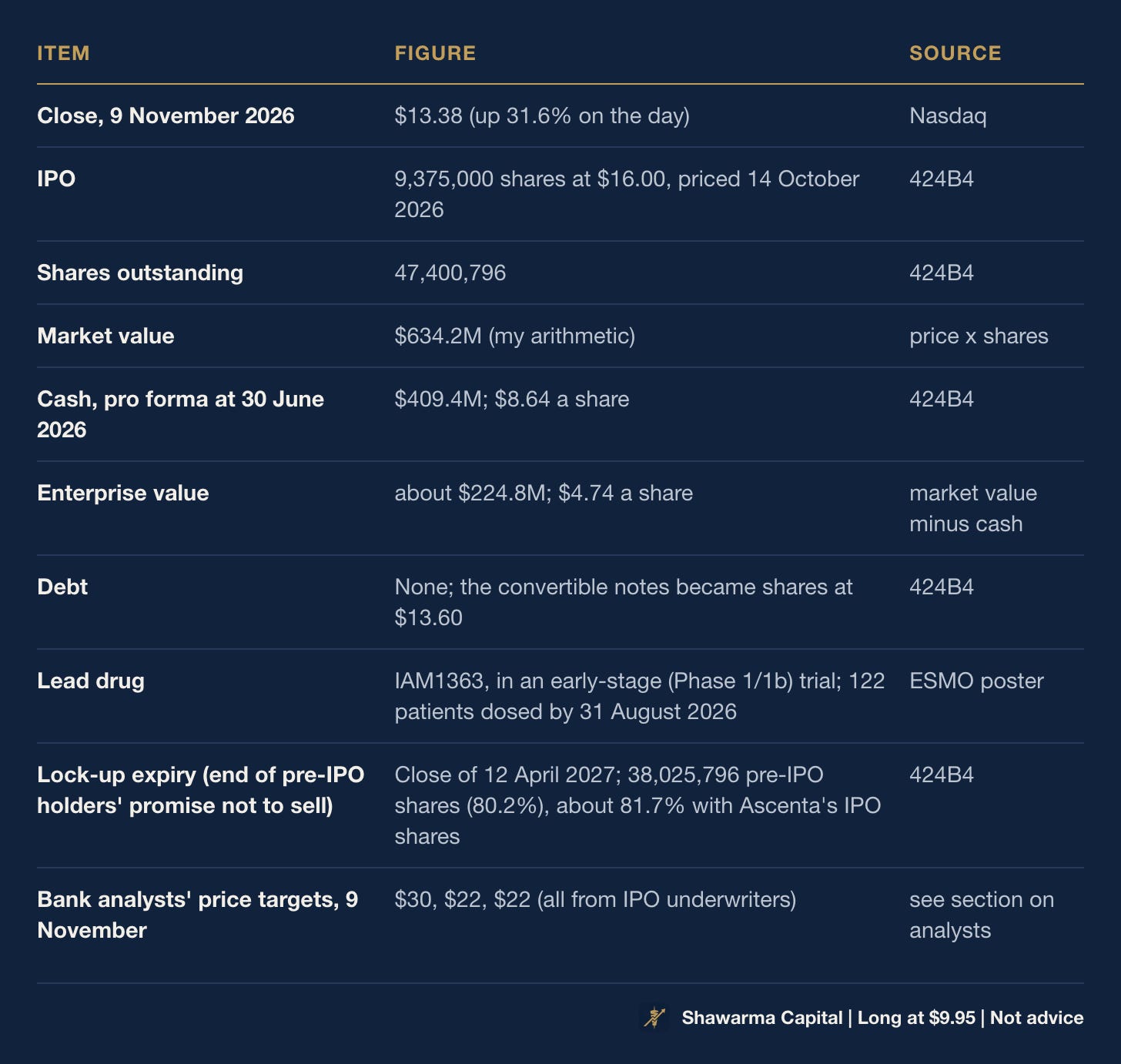
The $409.4M is not a current balance. It is the 30 June 2026 cash ($207.9M) plus $66.5M from convertible notes (loans that turned into shares at the IPO) and $135.0M of net IPO money; "pro forma" means adjusted as if those had already arrived. It leaves out AbbVie's $40M upfront payment, any extra shares the underwriters (the banks that ran the IPO) may still buy, and everything spent since June (424B4).
What is Iambic Therapeutics?
Iambic designs pill drugs with its own AI software and tests them in people. It has 171 employees, 140 of them in research (424B4). It has one drug in human trials, two close behind, and paid research deals with AbbVie, Takeda, Lundbeck, Bayer and Revolution Medicines.
It has no approved product, has lost money every year, and in the prospectus calls its approach "novel and unproven" (424B4).
Why did IAM stock fall below its IPO price?
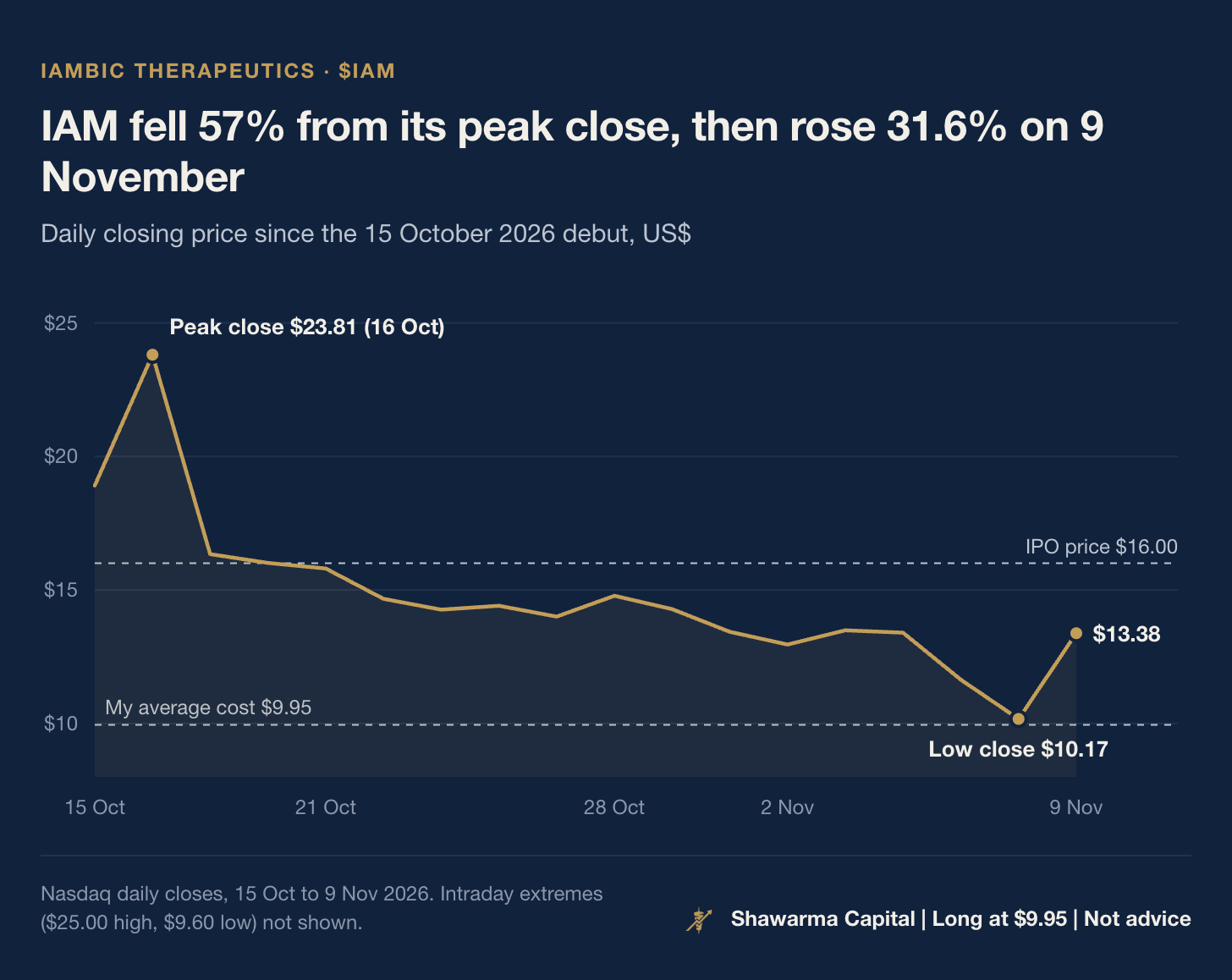
No public source gives a cause, but trading records suggest IPO buyers sold into a market with few shares. The stock closed as high as $23.81 on its second day and as low as $10.17 on 6 November, a fall of 57% in 15 sessions (Nasdaq).
(New) The records point to IPO buyers selling, not to a short-seller attack. Short sellers borrow shares to bet on a fall. Borrowing IAM cost 25% to 59% a year, with few shares on offer (iBorrowDesk). A market rule that restricts short selling after a 10% one-day drop was triggered six times, so shorting was restricted on 10 of 18 days (Nasdaq short-sale list). Of trading reported away from exchanges, 54.2% was marked short over the period, with no jump on the crash days (my reading of the public files).
That is my inference, not a documented fact.
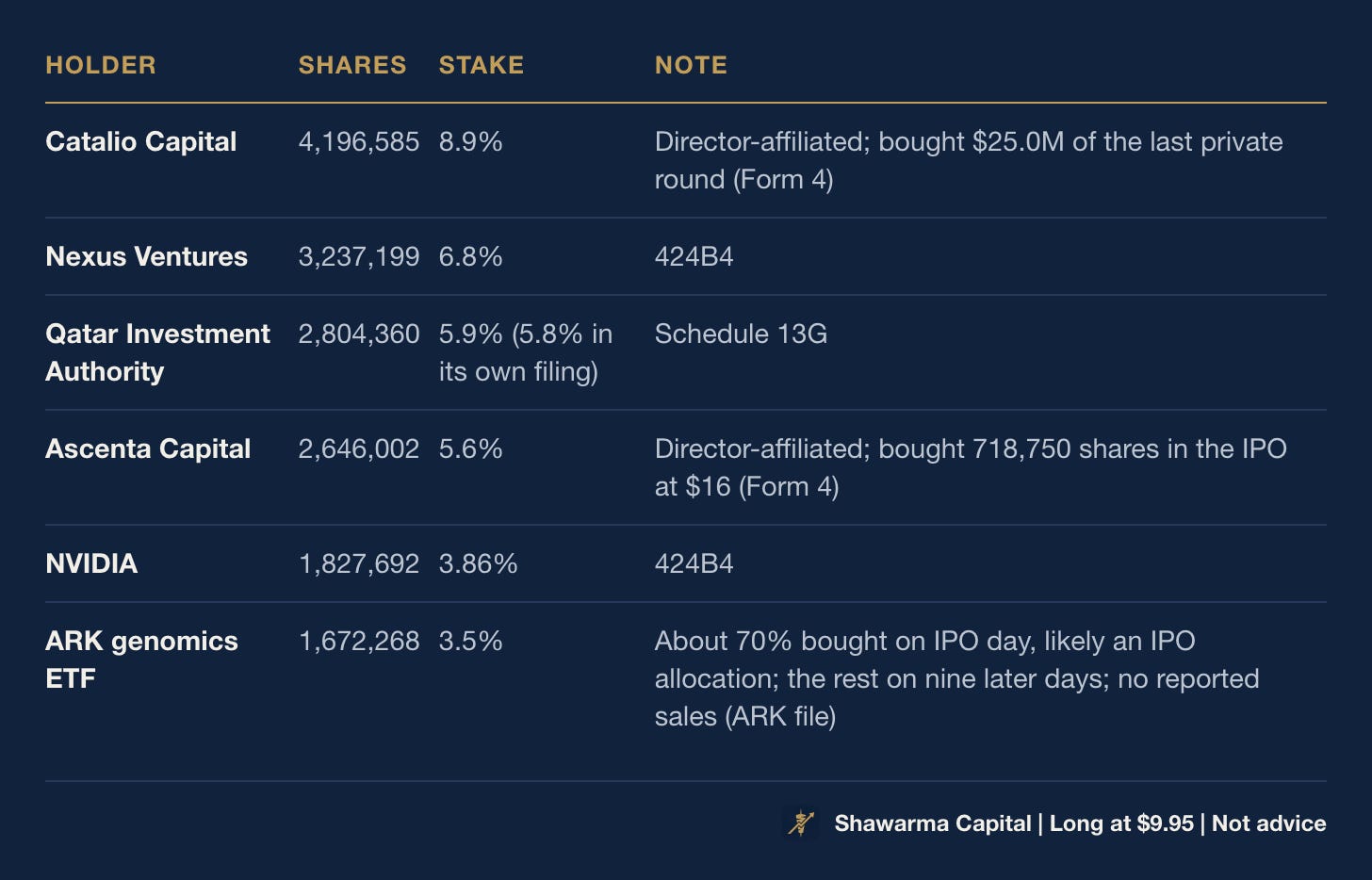
Only about 18% of shares can trade; the rest are locked up until April. One buyer was visible throughout: ARK's genomics fund. About 70% of its shares came in one block on IPO day, likely an IPO allocation (my inference). It bought the rest on nine later days, reported no sales, and held 1,672,268 shares (3.5%) in its 9 November holdings file (ARK holdings file).
What is IAM1363, and does it work?
The drug in plain words
IAM1363 is a once-daily pill that blocks HER2 and was built to reach the brain, where HER2 cancers often spread. HER2 is a protein that tells cells to grow; some breast, lung and other cancers carry too much of it or a faulty version. IAM1363 is a TKI (tyrosine kinase inhibitor, a pill that switches such a protein off). It binds permanently to HER2 and is taken at 960 mg (424B4).
The numbers
On the strict count, IAM1363 shrank tumours in 23% of patients and brain tumours in 18%. ORR (objective response rate) is the share of patients whose tumours shrink by a set amount. A response is confirmed when a second scan weeks later still shows it. Intracranial means inside the skull, so intracranial ORR counts brain tumours only. A data cut is the date on which the results were frozen for analysis.
The confirmed rate has drifted down as more patients were counted, while the all-responses rate has edged up.
Sources: prospectus drafts and final (DRS/A; 424B4); ESMO 2026 poster.
As Part 1 argued, the confirmed figures are the ones to use. They pool patients at 960 mg and higher doses; no rate at 960 mg alone has been published.
Four more responses awaited a confirming scan at the August cut; if all confirm, the rate becomes 30% (16 of 53). With 53 patients the uncertainty is wide: my calculated 95% range (where the true rate most likely sits) is roughly 12% to 36% overall and 5% to 40% for the brain group.
No patient's tumour disappeared completely. The company has not published median figures for how long responses last or how long patients go without the cancer growing (ESMO poster).
Why 23% is better than it looks
The patients had already had the strongest HER2 drugs, so any shrinkage is meaningful. In the brain group, 21 of 22 had already had Enhertu (trastuzumab deruxtecan, the leading HER2 drug) and 19 of 22 had already had tucatinib (Tukysa, the approved HER2 pill for brain spread) (ESMO poster).
For scale, tucatinib given after Enhertu produced a best response rate (not necessarily confirmed) of 32.6% in one published review of past patients, and that was a three-drug combination, not a single pill (PubMed 38568692). Cross-study comparison is unreliable; I use it only to show the bar here is low.
Safety favours the chosen dose
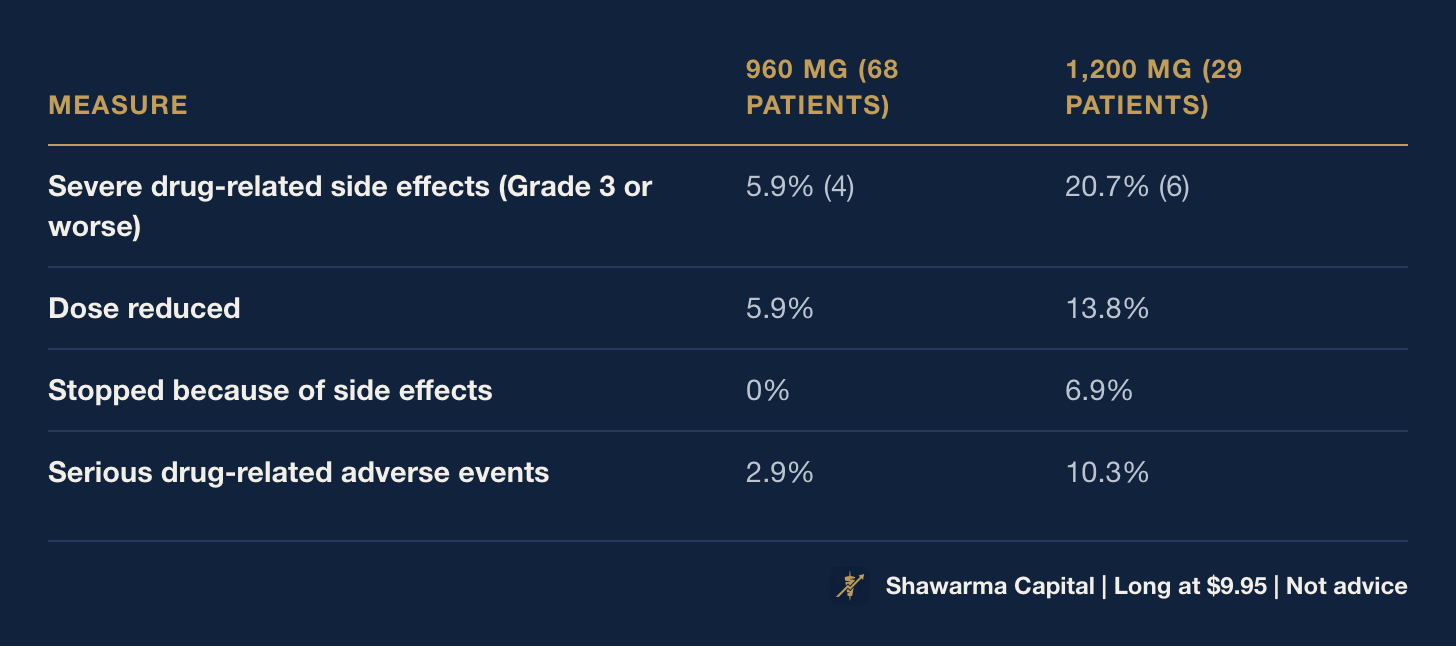
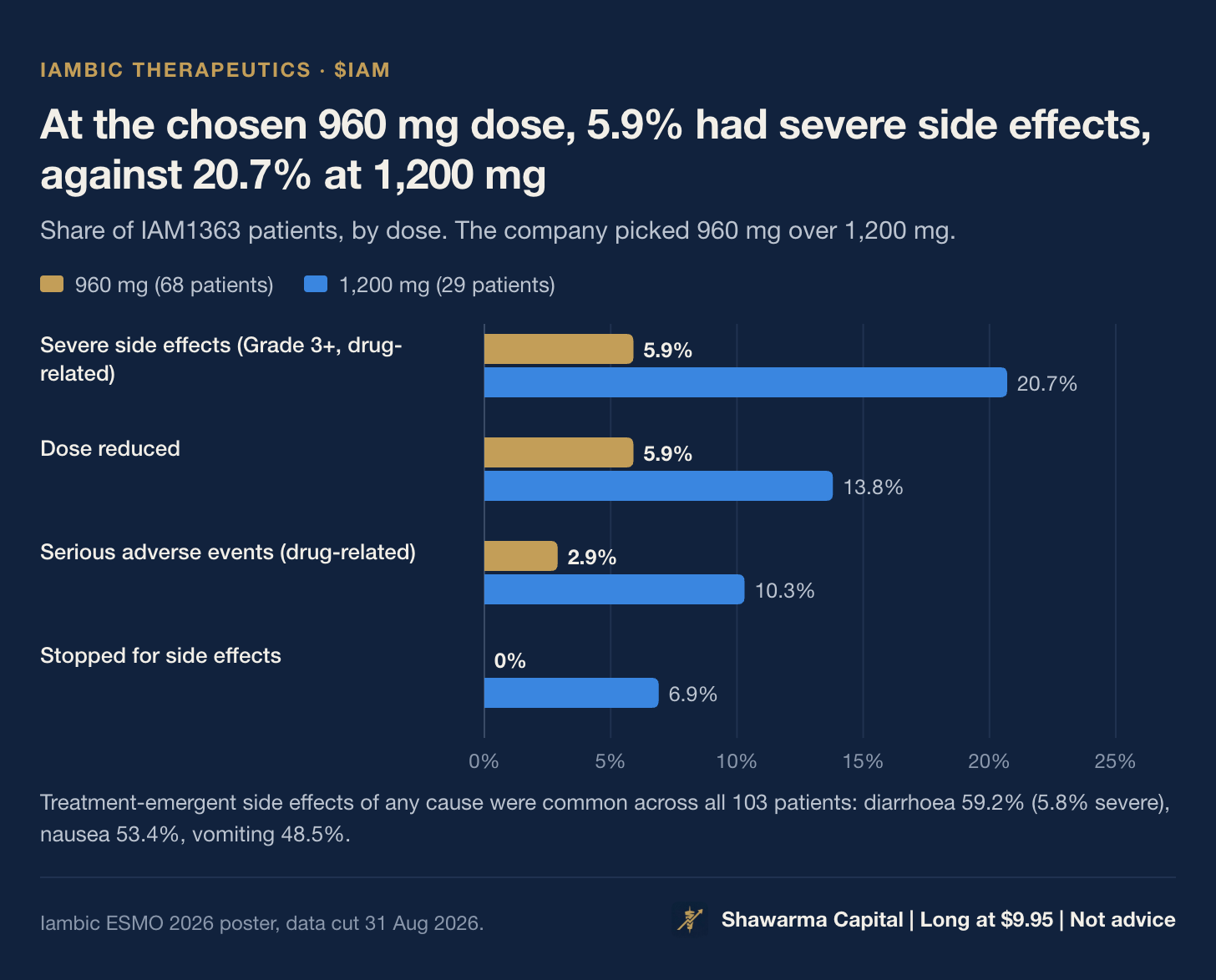
At 960 mg, severe side effects were far rarer than at 1,200 mg, but stomach side effects were common at every dose. "Grade 3 or worse" means severe. A "serious" adverse event is one that, for example, needs hospital care.
Source: ESMO 2026 poster.
Across the 103 patients at 960 mg or above, 59.2% had diarrhoea (5.8% severe), 53.4% nausea and 48.5% vomiting. One patient died of an unknown cause (a Grade 5, or fatal, event), and the death was judged unrelated to IAM1363 (ESMO poster).
The four severe events at 960 mg were nausea, diarrhoea, a kidney injury and one lung inflammation that resolved when the drug was stopped (424B4). Yet the poster shows no one at 960 mg stopping for side effects; the filings do not explain this, and the stop may have been temporary.
Two company claims to discount
Tumour concentration. The claim that the drug concentrates in tumours rests on two patients (more than 20-fold at 120 mg, close to 30-fold at 1,560 mg). Neither took the 960 mg dose (424B4).
Selectivity (how strongly the drug hits HER2 rather than EGFR, a related protein). As Part 1 showed, the company's figure has moved between 1,000-fold and 5,000-fold. (New) The website said "over 5000-fold selectivity against EGFR" until August 2026, then "greater than 1,000-fold" from 2 September 2026 (archived May 2026 page; archived September 2026 page). The October 2026 ESMO poster still says ">5000-fold". The prospectus's ">1,000-fold" is measured in animals and combines about 500-fold selectivity in the test tube with about 10-fold higher concentration in tumours (424B4). Use the lower figure.
How does IAM1363 compare with rival HER2 drugs?
Rivals post higher response rates, but in other cancers, earlier patients or combinations. An antibody-drug conjugate (ADC) is an antibody that carries chemotherapy to the tumour; Enhertu is one.
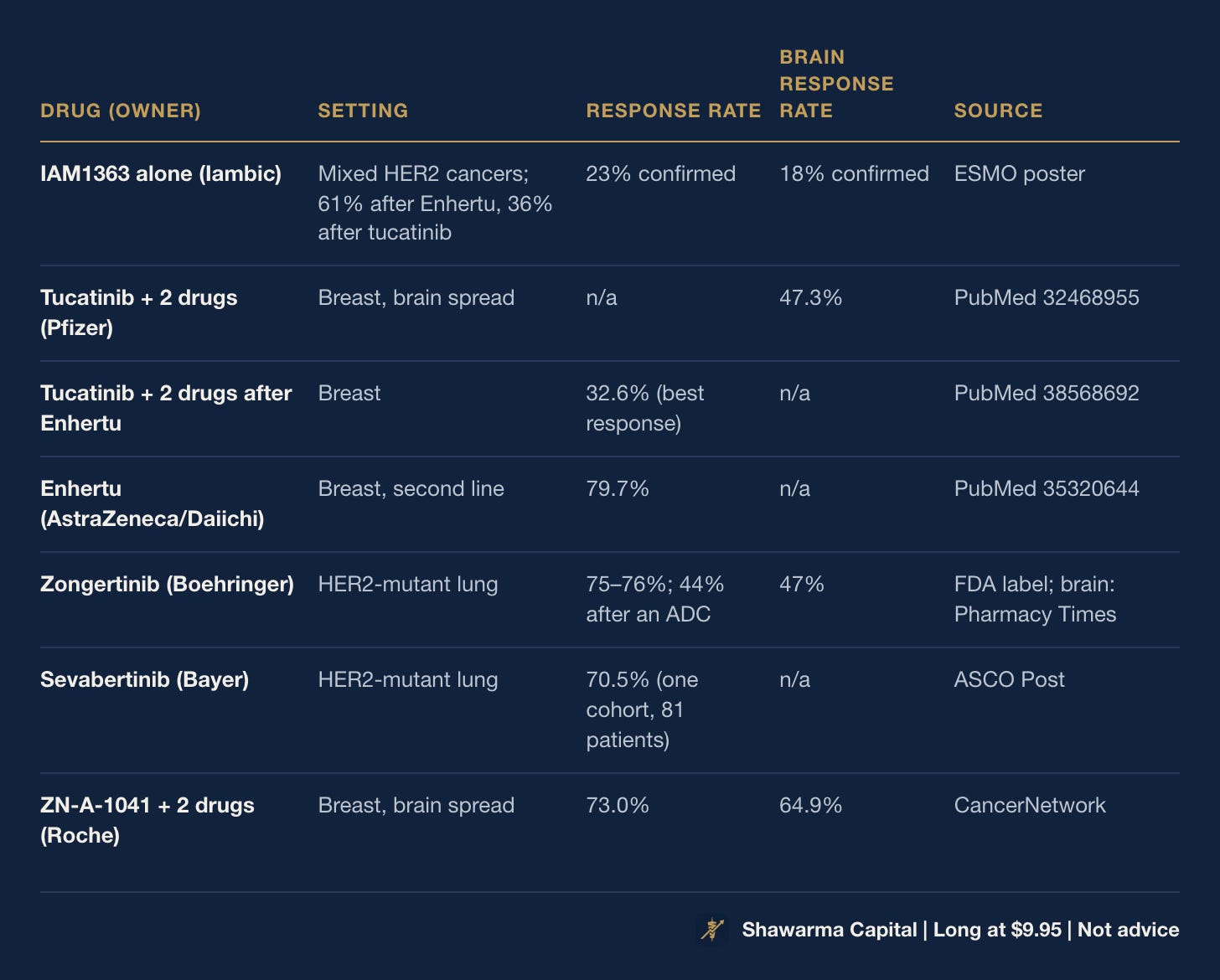
The table is a map, not a ranking.
How does Roche's BREnnA trial compare with Iambic's breast-cancer plan?
Roche competes head-on with Iambic's main breast-cancer route but not with its fast route. BREnnA tests Roche's brain-penetrating HER2 pill against tucatinib, each given with two standard drugs (trastuzumab and capecitabine). This mid-to-late-stage (Phase 2/3) trial plans 650 patients at 219 sites and started on 21 May 2026 (ClinicalTrials.gov NCT07413939).
Iambic describes two routes in breast cancer (424B4):
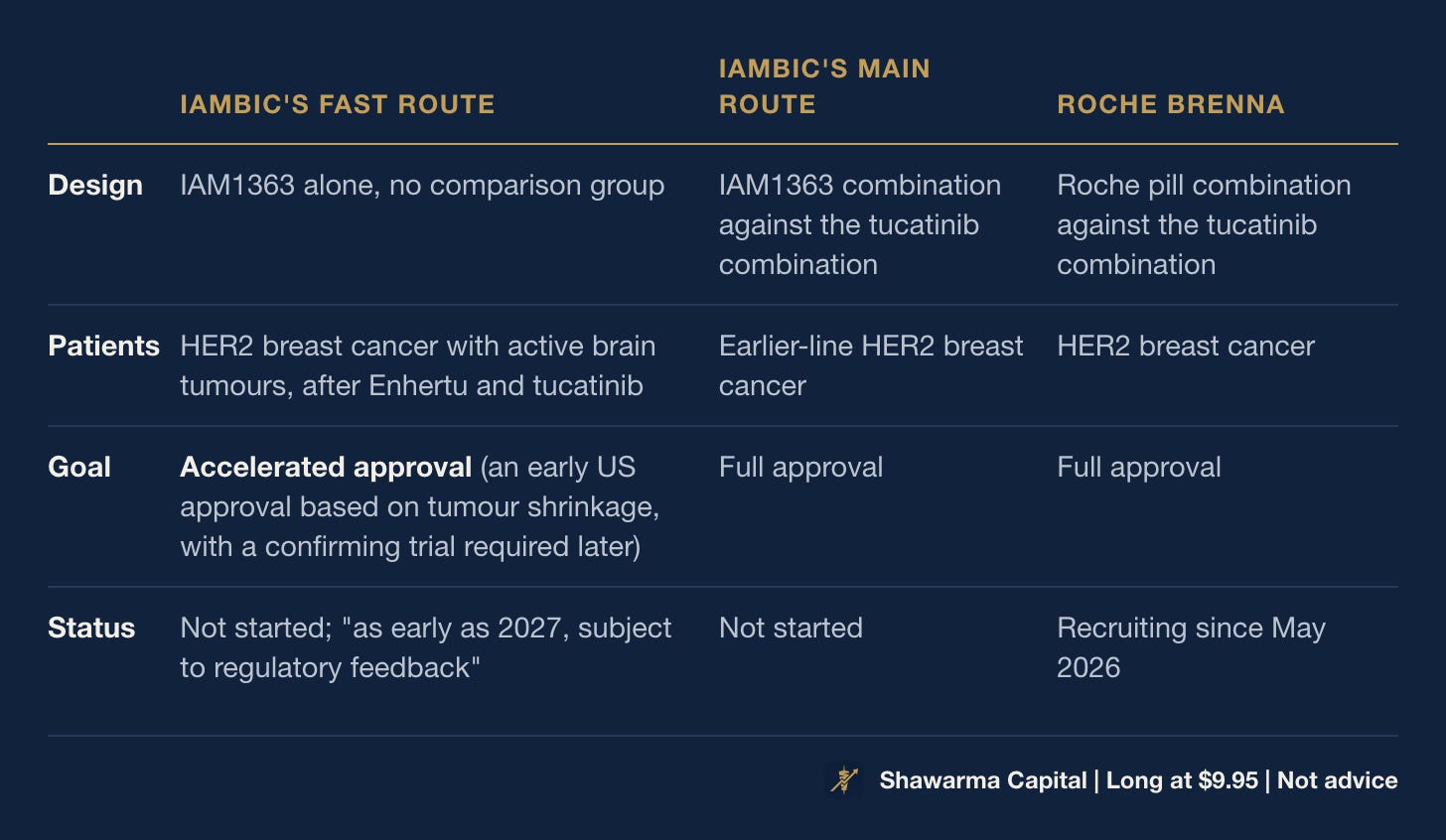
The fast route is where Iambic has room. Roche is not running a single-drug trial in patients who have already failed tucatinib. Iambic's 18% confirmed brain response was measured in exactly that group.
On the main route Iambic is at least a year behind a much larger rival with the same design. Roche's combination has shown a 64.9% brain response rate, though with a severe rise in bilirubin (a liver marker) in 20% of patients (CancerNetwork). No severe liver side effects were reported at Iambic's 960 mg dose, which is its argument here, but its combination groups are still small.
The fast route's approval bar is uncertain. (New) The FDA refused poziotinib with a 27.8% response rate (Healio), and approved mobocertinib at 28% only to see it withdrawn after its confirming trial failed (BioSpace). A confirmed rate near 20% will need long-lasting responses, and duration data are not public.
The fast route's market is small. My estimate is 1,300 to 2,750 US patients a year: about 5,500 patients with HER2 breast cancer that has spread, times the 23% to 50% who develop brain tumours. Tukysa, the closest product, sold $463M in 2025 and $402M in the first nine months of 2026 (Pfizer Q4 2025; Pfizer Q3 2026). Enhertu, by contrast, sold $4.98B in 2025 across its two owners (AstraZeneca 6-K).
What else is in the pipeline?
Iambic has two more drugs near human testing, both late to crowded fields but each with an angle. An IND (investigational new drug application) is the filing that asks the FDA for permission to start human trials. Neither has been given to a person; all data are from animals and the laboratory.
IAM217, a KIF18A blocker
IAM217 blocks KIF18A, a protein some unstable cancer cells need in order to divide; its edge would be reaching the brain (Nature 2021, via PubMed). Iambic submitted the IND on 30 September 2026 (424B4; Iambic release, 5 October). FDA clearance has not been announced.
(New) The rivals. Seven KIF18A drugs from six owners are already in human trials.
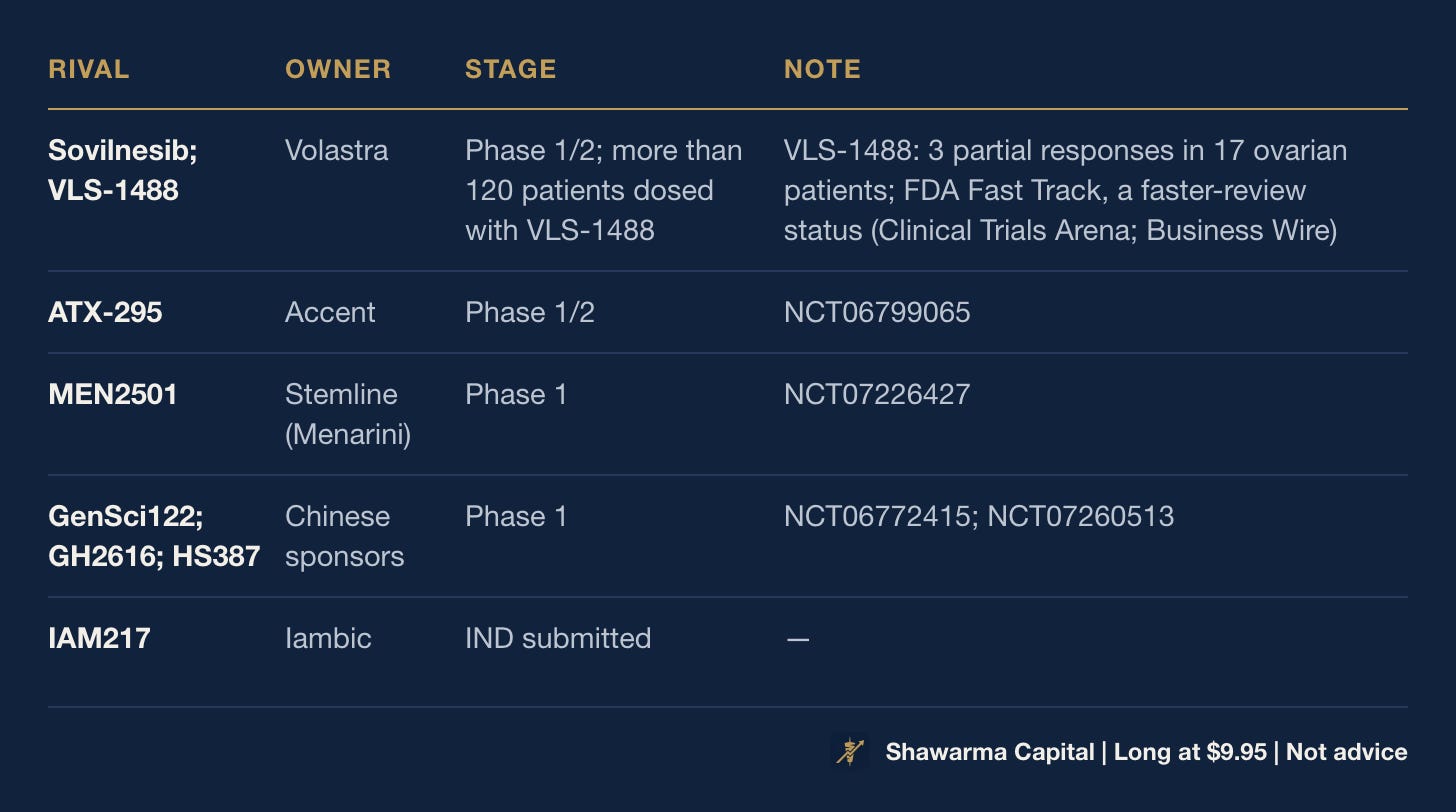
One of them, HS387, I found only in a search result, not in a trial registry. Iambic is about two years behind Volastra. In a mouse model of brain tumours it reports about 90% shrinkage against none for a rival compound that it "believes" is VLS-1488 but has "not independently confirmed" (424B4). That is a company claim in mice.
IAM-C1, a CDK2/4 blocker
IAM-C1 tries to do in one pill what large companies do with two. CDK2 and CDK4 are proteins that drive cell division. Drugs that block CDK4 and CDK6 are a large class; the leader, Verzenio, sold $5.72B in 2025 (Lilly). Cancers often escape them through CDK2. The idea is one pill hitting both CDK2 and CDK4 while sparing CDK6 to protect white blood cells. The IND is guided for the fourth quarter of 2026 (424B4).
(New) The rivals. Several are already in late-stage trials.
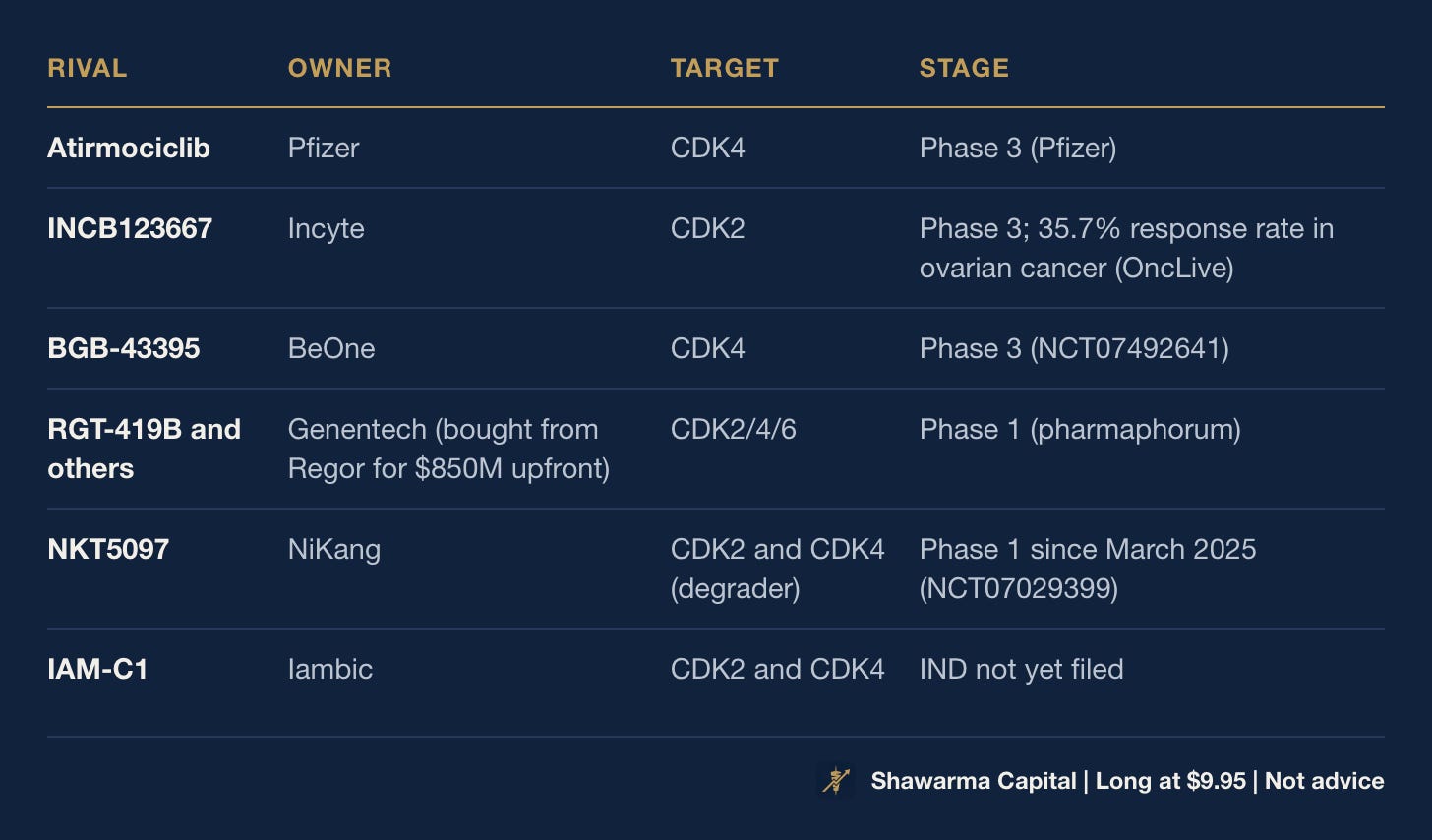
Iambic's selectivity evidence is not like-for-like: it compares four unintended hits at one concentration with eight for a Pfizer compound at a higher concentration (424B4). Patents are the weak point (risk 9).
My read: I expect first human results in late 2027 or 2028. Both are worth something, because buyers pay real money for such assets: Genentech paid $850M upfront for a CDK portfolio, and Allorion received $40M upfront for one CDK2 drug (BioWorld). They are not yet worth a large number.
What does Iambic's AI actually do?
The software is competitive with the best public tools but unchecked by outsiders. NeuralPLexer predicts the 3D shape a drug and its target protein take when bound together. Enchant predicts how a molecule will behave in the body from limited data.
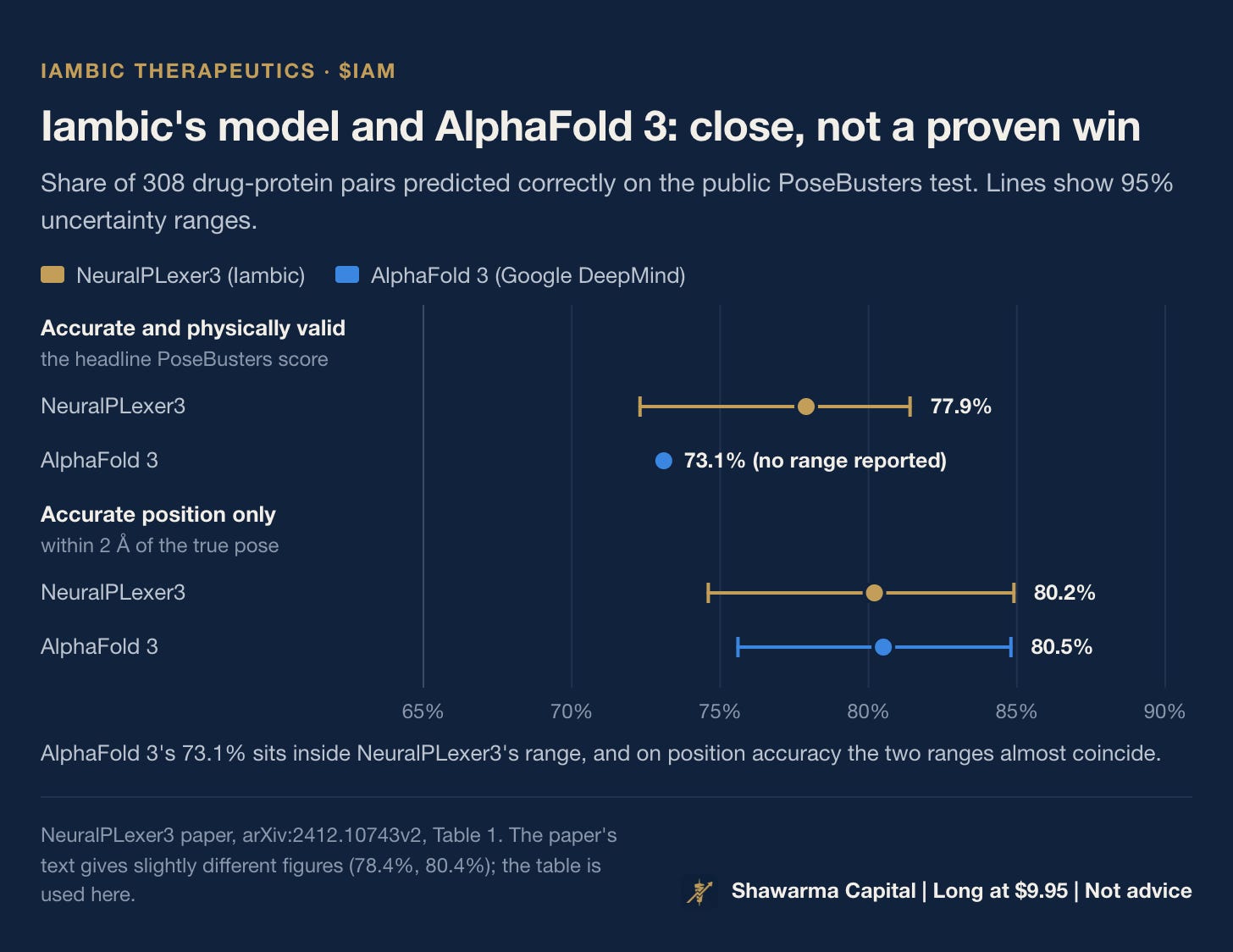
PoseBusters is a public test set of 308 drug-protein pairs used to score such predictions. On it, NeuralPLexer3 scored 77.9% against 73.1% for Google DeepMind's AlphaFold 3 (arXiv 2412.10743). AlphaFold 3's 73.1% sits inside NeuralPLexer3's own 95% range (72.3% to 81.4%), and the paper gives no range for AlphaFold 3 on this measure, so this is not a demonstrated win. On accuracy alone, without the check that the predicted shape is physically possible, the two scored 80.2% (range 74.6% to 84.9%) and 80.5% (75.6% to 84.8%), a tie.
Speed is the stronger claim, but the figures in circulation come from three different tests and should not be mixed: about 15 times faster than AlphaFold 3 in Iambic's own paper, on different chips; about 12 times by simple division of rounded run times; and about 105 times in an outside benchmark (PoseBench), which tested the first-generation model (arXiv 2412.10743; arXiv 2405.14108). No same-hardware test of NeuralPLexer3 against AlphaFold 3 has been published.
(New) What outside reviewers said. The NeuralPLexer3 paper was accepted as a poster at the NeurIPS 2025 conference. One reviewer recorded that the model's weights (the trained numbers that make it run) "will not be released", which stops others checking the results (OpenReview). As Part 1 found, no independent group has benchmarked NeuralPLexer3 or Enchant. Open models such as Boltz, Chai and OpenFold3 are now free to use (Drug Discovery Online).
My read: the platform is competitive, closed and unverified. I do not pay for a technology lead; I pay for three drug candidates made quickly and five companies paying to use it.
Who pays Iambic, and how much?
Five drug companies pay Iambic, so the platform has buyers, but almost all headline deal value is unpaid and may never arrive.
Separately, Jazz Pharmaceuticals backs one IAM1363 breast-cancer group through a clinical collaboration, pairing it with Jazz's HER2 antibody zanidatamab. That is a trial partnership, not a platform deal (424B4).
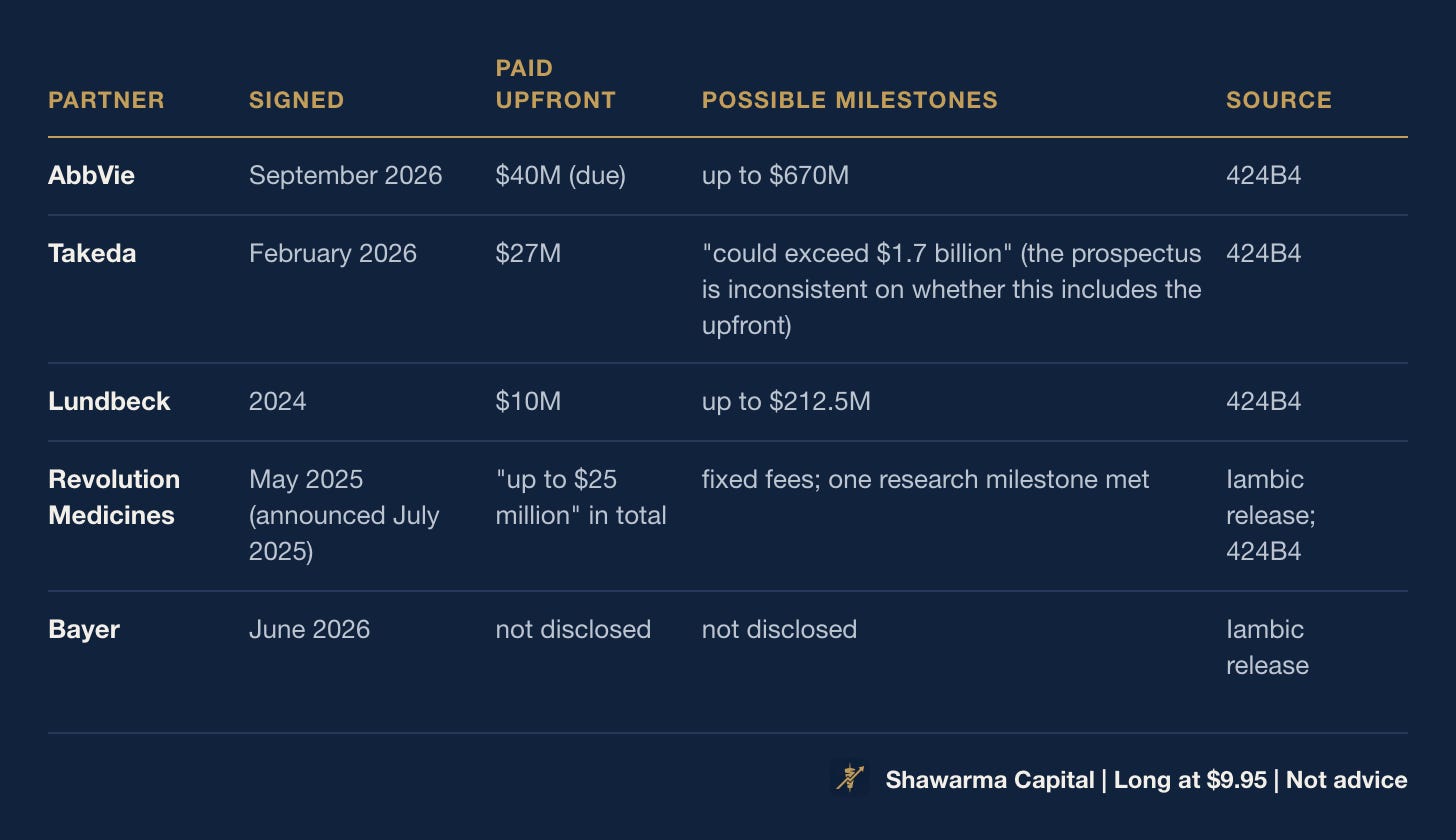
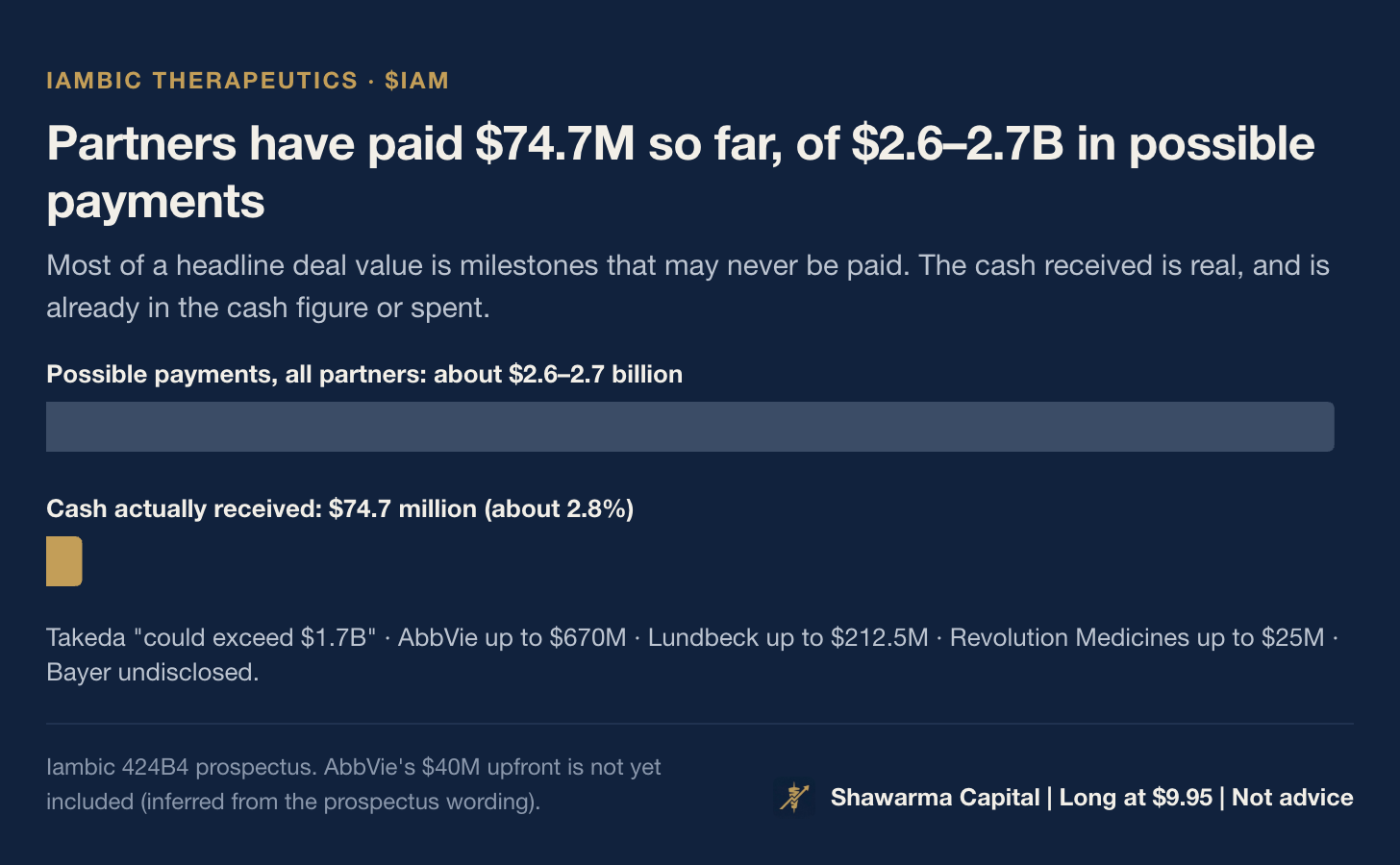
Iambic had received $74.7M from all partners per the prospectus, about 2.8% of roughly $2.6B to $2.7B of possible payments (424B4). In one industry dataset of biopharma acquisitions, only about 22% of milestone events were ever met (Fierce Biotech).
The $74.7M was already received, so most of it is in the $409.4M cash figure or has been spent (payments after 30 June are left out of that figure, like spending since June); it is not value on top. It does show that partners pay real money, at a rising pace: one deal in 2024, one in 2025, three in 2026. Collaboration revenue was $12.8M in the first half of 2026 against $9.4M in all of 2025 (424B4). The one partner payment on top of the cash figure is AbbVie's $40M upfront, which I infer is not yet included.
(New) The contracts do not block a sale of the company. The three filed agreements (AbbVie, Takeda, Lundbeck) contain no right of first negotiation, no standstill and no most-favoured-nation clause (AbbVie agreement; Takeda agreement; Lundbeck agreement). These are the clauses that usually let a partner slow or stop a takeover.
They do limit which patents a buyer could enforce against partners, which trims what a buyer gets without preventing a deal. The Bayer and Revolution Medicines contracts are not filed.
NVIDIA is an investor and technology collaborator (it co-owns one NeuralPLexer patent family with Caltech), not a paying customer. It put in $25M and holds 1,827,692 shares, or 3.86%. Iambic rents its computing from Lambda and Amazon (424B4).
How much cash does Iambic have, and how long does it last?
The cash lasts into late 2028, the company says, but it pays for starting the key trials, not finishing them.
Cash: $409.4M pro forma at 30 June 2026, excluding AbbVie's $40M (424B4).
Spending: net loss was $50.1M in the first half of 2026 and $77.3M in 2025. I estimate cash operating costs at about $32M a quarter before partner receipts, half my estimated $63.9M for the first half of 2026 (reported operating cash outflow was only $24.9M because partner payments came in) (424B4).
Runway: "into or through the fourth quarter of 2028" (424B4).
What the money does not cover: about $75M of IPO proceeds is for IAM1363, to finish Phase 1 and to "initiate" Phase 2 and Phase 3 trials. Finishing a registrational trial (one large enough to support approval) is not funded (424B4).
The greenshoe is unresolved. A greenshoe is the underwriters' option to buy extra shares after an IPO; here, 1,406,250 shares, expiring around 13 November 2026. Full exercise would add about $20.9M and lift the share count to 48,807,046 (424B4). No filing yet says whether it was used.
The first quarterly report will not show the IPO money. That report (Form 10-Q), due around 30 November 2026, covers the quarter to 30 September, two weeks before the IPO money arrived. The first balance sheet with the IPO money will be the year-end one. The 10-Q rebuild Part 1 promised waits for the filing.
Who owns IAM, and when can insiders sell?
About 82% of the shares are locked up until 13 April 2027. The lock-up covers substantially all of the 38,025,796 pre-IPO shares, 80.2% of the company, plus the 718,750 IPO shares bought by Ascenta, a director-affiliated fund: about 81.7% in all. That leaves about 18% free to trade.
It ends at the close on 12 April 2027. The four lead underwriters (J.P. Morgan, Jefferies, BofA and Citi) can release shares earlier at their discretion (424B4). The pre-IPO shares alone are about four times the 9,375,000 IPO shares.
Six holders own about a third of the company between them.
What insiders and funds paid
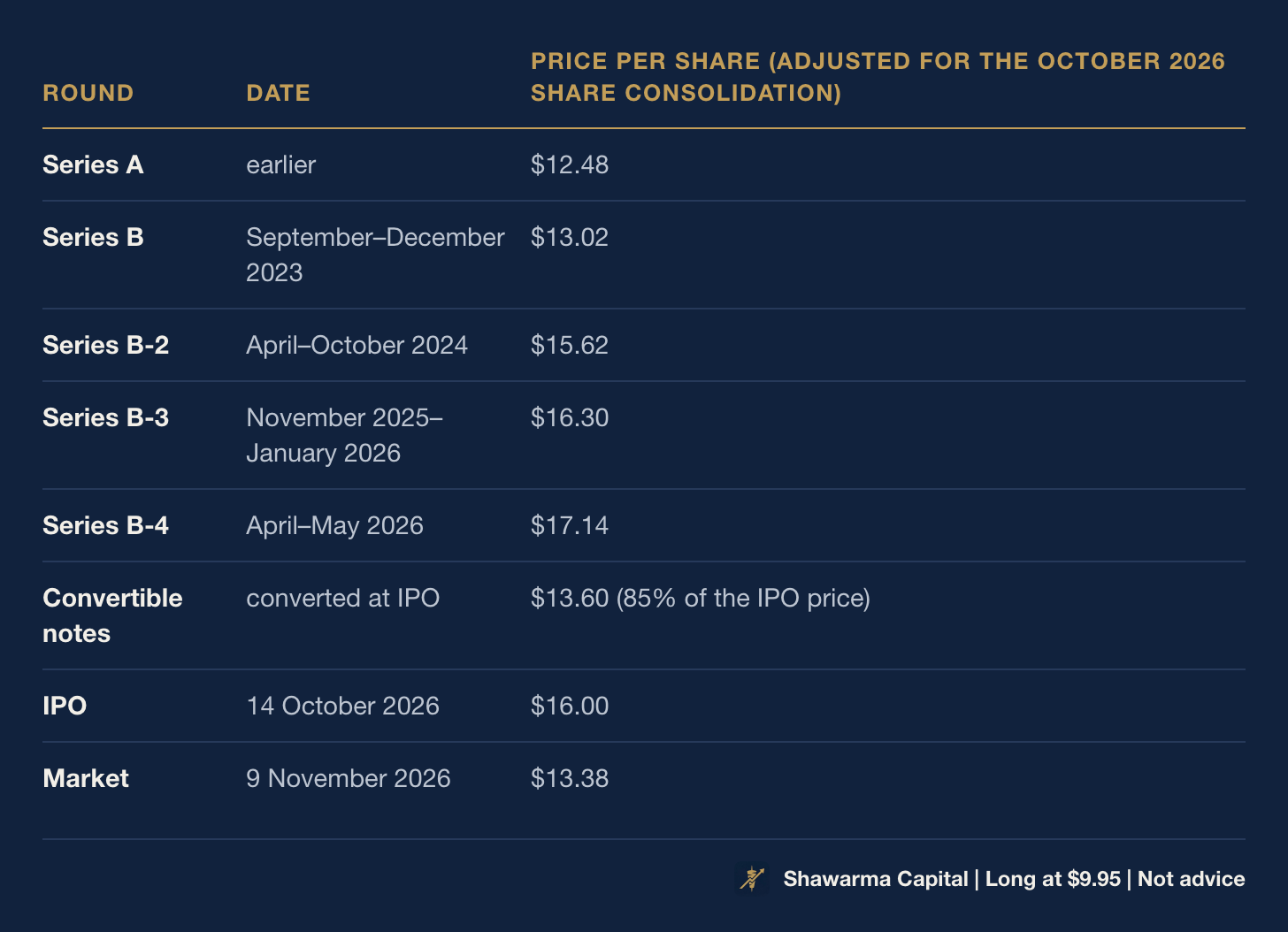
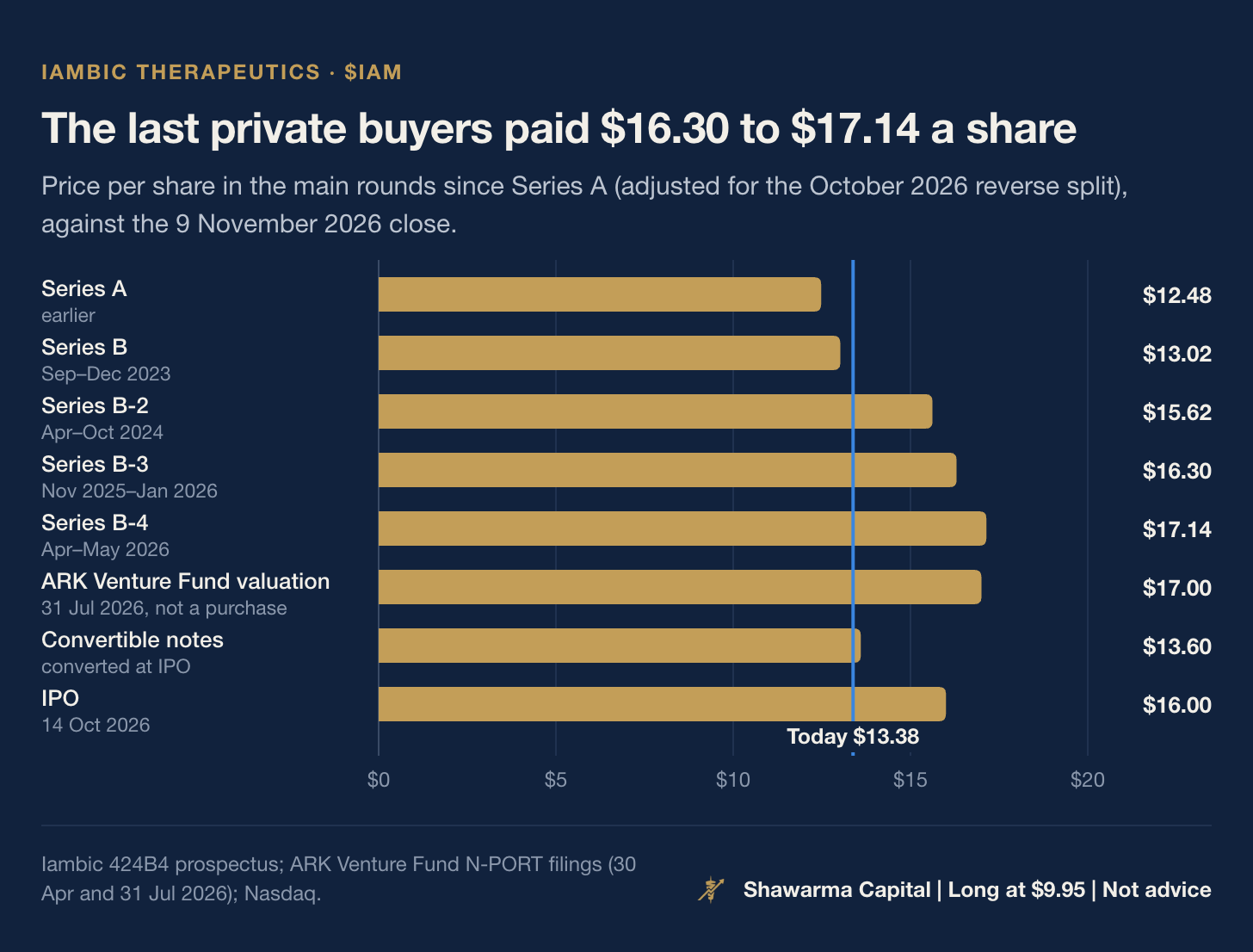
Every private round since 2024 paid more than today's price.
Source: 424B4.
In the last private round, related parties (insiders and large holders) bought 92.3% of the $32.8M raised at $17.14, led by Catalio ($25.0M) and NVIDIA ($5.0M) (424B4). ARK Venture Fund valued its Series B-3 stake at its $16.30 cost, then $16.50 and $17.00 by 31 July 2026, in its N-PORT reports (the portfolio filings funds make to the SEC) for 31 October 2025, 30 January 2026, 30 April 2026 and 31 July 2026.
These prices cut both ways. Insiders and funds with access to the company's private data paid $16.30 to $17.14 between November 2025 and May 2026, which supports the view that $13.38 is cheap. Two caveats: they bought convertible preferred shares, which would have been repaid first in a sale, not the common stock sold today; and outside funds such as ARK and the Qatar Investment Authority had the due-diligence access given to investors, not an insider's full view.
Buyers from Series B-2 onward, note holders at $13.60 and IPO buyers at $16 are all below their cost, so for them the April unlock is not a wall of large profits. Series A ($12.48) and Series B ($13.02) holders are in profit, as are the earliest holders: Series Seed ($1.83) and Series A-1 ($9.98) investors, and holders of the 3.3M options outstanding at 30 June 2026 (weighted-average exercise price $6.89) (424B4).
No officer or director has bought or sold shares in the market since the IPO. Ascenta's $11.5M IPO purchase is the only insider-affiliated buy.
Founder incentives: what the filings say
The founders' performance award pays out only if the HER2 drug reaches a registrational trial, gets a major partner, or the company is sold. Each founder holds 317,394 performance share units (shares granted only if set goals are met), awarded in March 2026. The prospectus says "the business milestone has not been met as of the date of this prospectus" but does not say what it is (424B4, Executive compensation).
As Part 1 reported, the founders' insider ownership filings (Form 3) do. It is met at the earliest of three events: the first patient dosed in a HER2 trial that, with earlier data, could support a US marketing application (or an equivalent trial abroad, including any Phase 3); a deal giving another company exclusive or shared US or EU commercial rights to the HER2 drug; or a takeover. The deadline is 3 March 2033 (Tom Miller Form 3; Fred Manby Form 3).
(New) The same Form 3s show that the remaining half of each founder's 2023 performance option vests when the company submits an IND for a CDK programme. That gives the founders a direct reason to file the IAM-C1 IND.
Each founder also received 793,200 options at $16.00 and 132,200 restricted stock units at the IPO. Those options pay only above $16 (424B4).
What is IAM stock worth?
The Part 1 model, updated to today's price
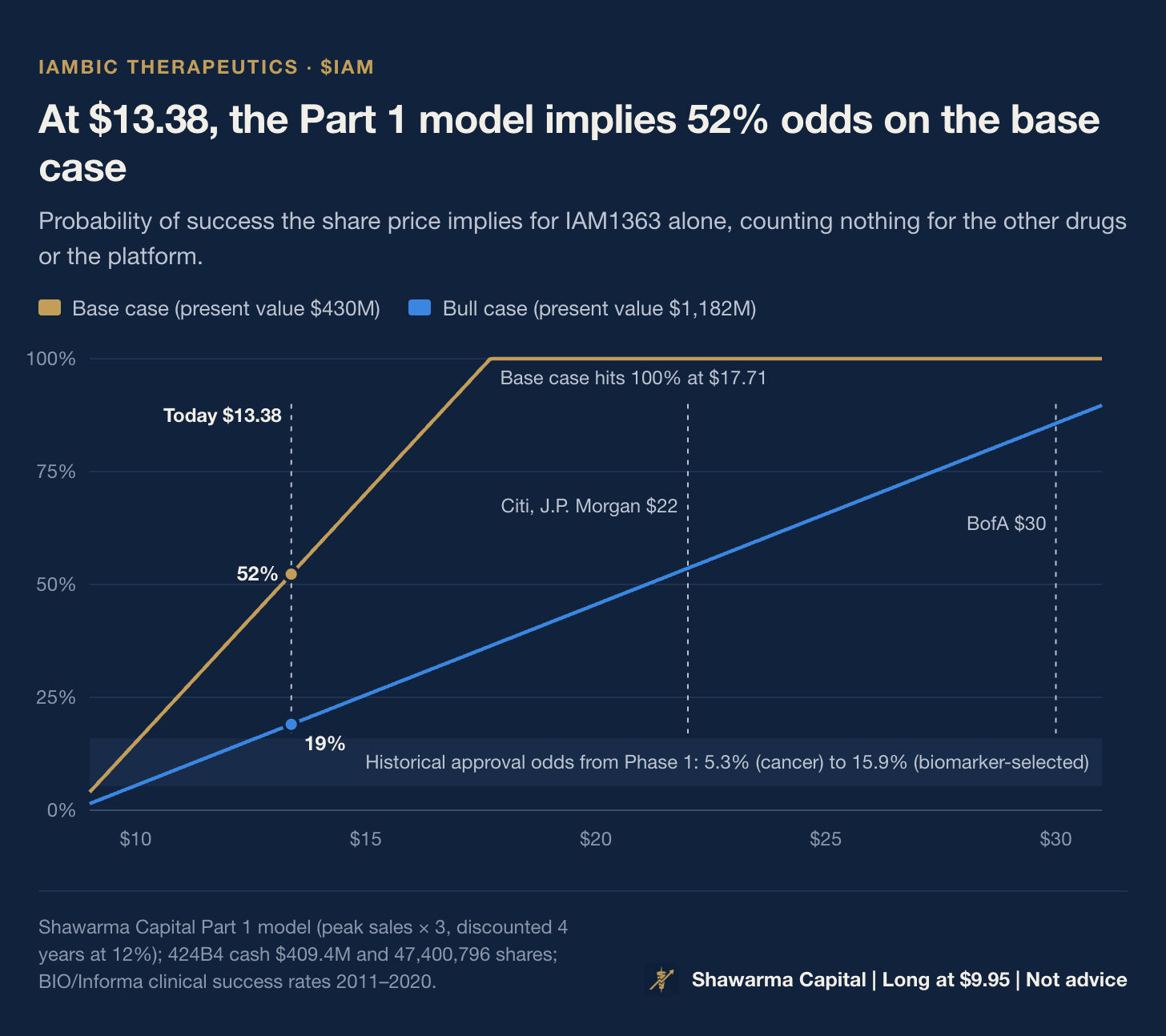
On Part 1's simple model, today's price asks a lot of the HER2 drug alone. The model takes peak annual sales of IAM1363, multiplies by three, and discounts four years at 12% to today's money (its present value), with zero for everything else. It gave $430M on the base case ($226M of peak sales) and $1,182M on the bull case ($620M).
Dividing today's $225M enterprise value by those, the price implies about 52% odds of success on the base case and 19% on the bull case.
That is a high bar. Historical approval rates from Phase 1 are 5.3% for cancer drugs and 15.9% for drugs in all diseases matched to a biomarker (a measurable patient trait, here HER2), as IAM1363 is (BIO). IAM1363 has already shown responses on a proven target, so it deserves more than those averages, but I would not give it 52%. If IAM1363's base case were all there was, the stock would not be cheap.
The higher the price, the more the HER2 drug alone must deliver; at $17.71 the base case would need certainty.
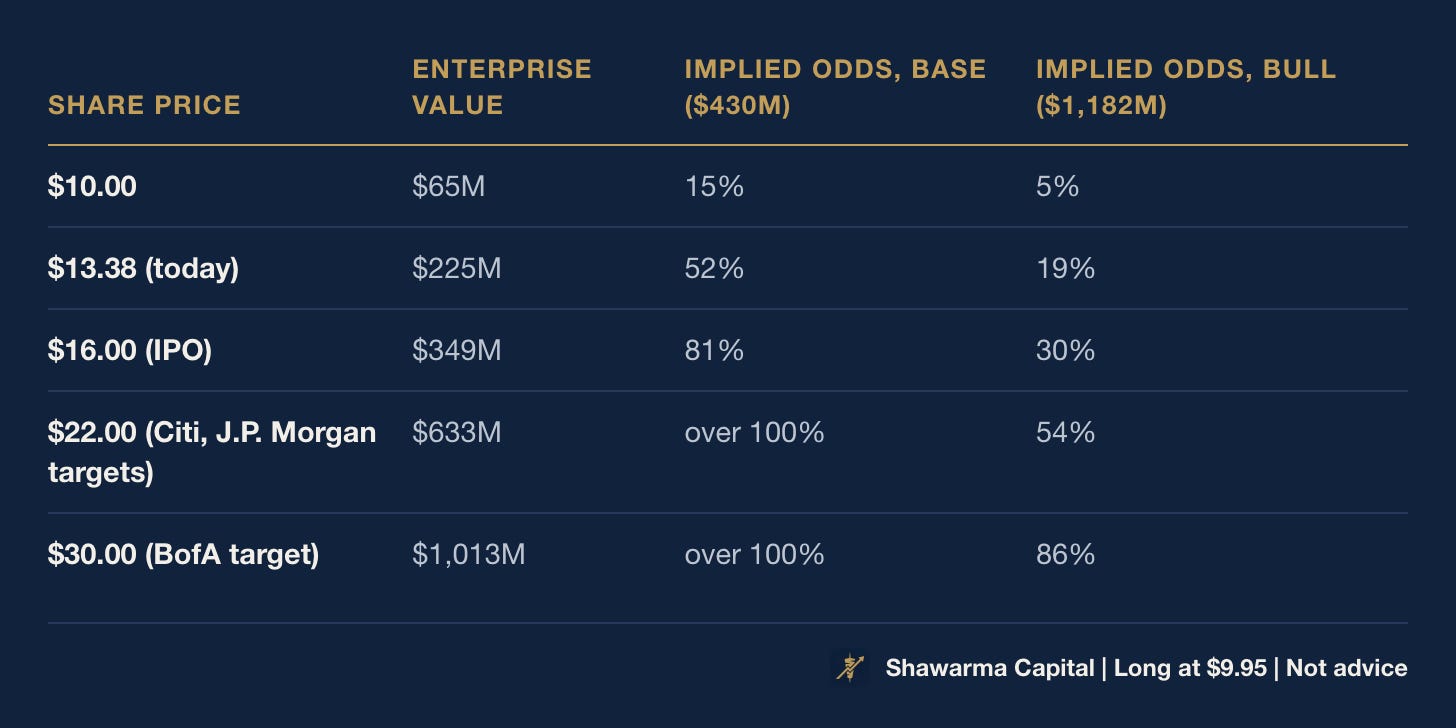
My arithmetic, on 47,400,796 shares and $409.4M of cash.
Why I am still bullish: what the simple model leaves out
The bull case rests on what the model sets to zero.
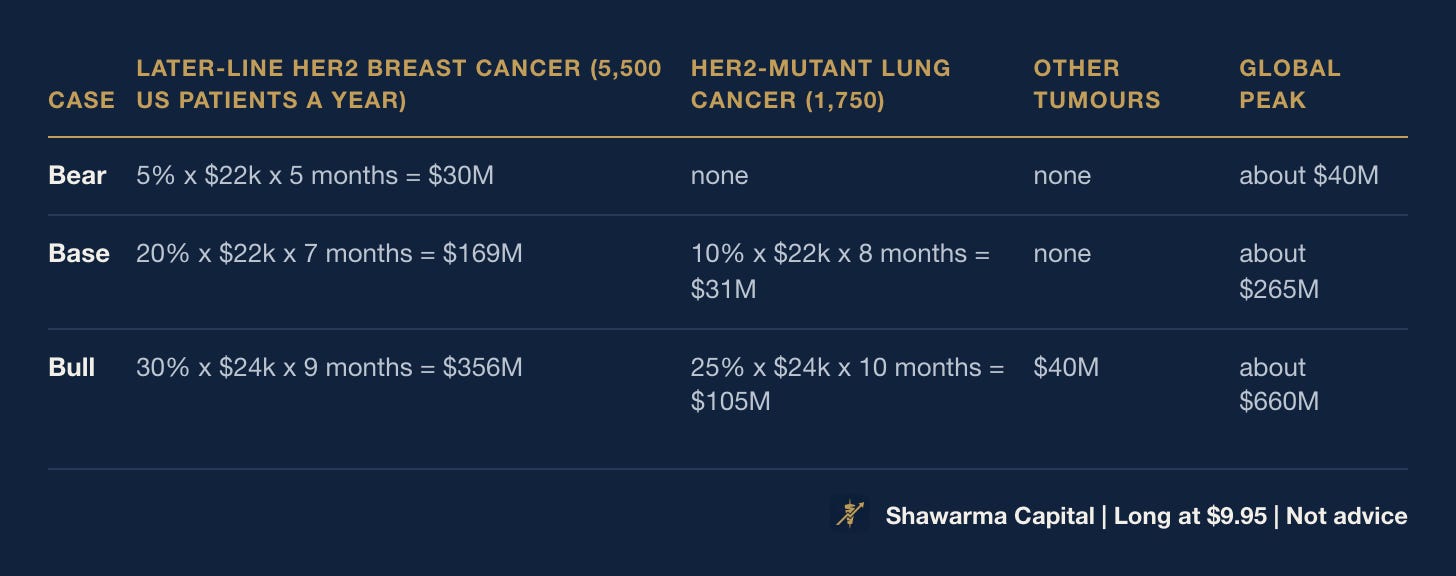
A higher sales case if the brain data hold. My estimates of unrisked peak sales (before any discount for failure) for IAM1363 are $40M (bear), $265M (base) and $660M (bull), slightly above Part 1's. Each is US patients a year x market share x net price a month x months on treatment, grossed up by 1.32x for sales outside the US (Tukysa's ratio):
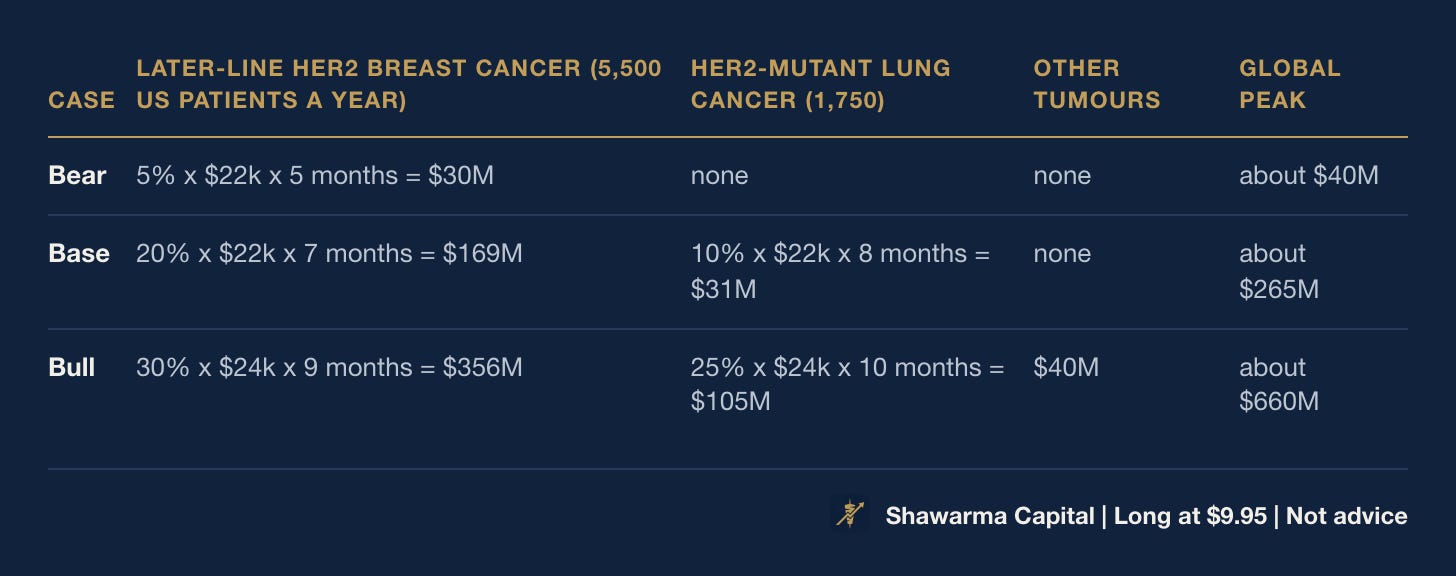
For scale, Tukysa sells $352M a year in the US, which on my price and duration assumptions is about 43% of the same breast pool, so the base case assumes a little under half of Tukysa's reach. The bull case needs use in lung cancer and in combinations. Shares, prices and durations are my assumptions and carry wide error.
Two more drugs. I estimate unrisked base-case peak sales of $145M for IAM217 and $290M for IAM-C1. At pre-clinical odds each is worth little today, but not zero: IAM217's IND is filed and IAM-C1's is due by the end of 2026.
Partners pay real money. The $74.7M received proves demand but is not extra value (it is in, or was spent from, the cash). AbbVie's $40M is the one partner payment on top, and three deals were signed in 2026.
Takeover value. No filed contract blocks a sale. Seattle Genetics paid $614M for Cascadian in 2018 to get tucatinib, then in a registrational trial (Fierce Biotech). That is 2.7 times Iambic's enterprise value for a single comparable drug. Against that, Pfizer wrote down Tukysa by $820M in late 2025 (Pfizer Q4 2025), so buyers will not overpay for this class.
Insider and fund entry prices of $16.30 to $17.14, and ARK's $17.00 valuation in July (caveats in the ownership section).
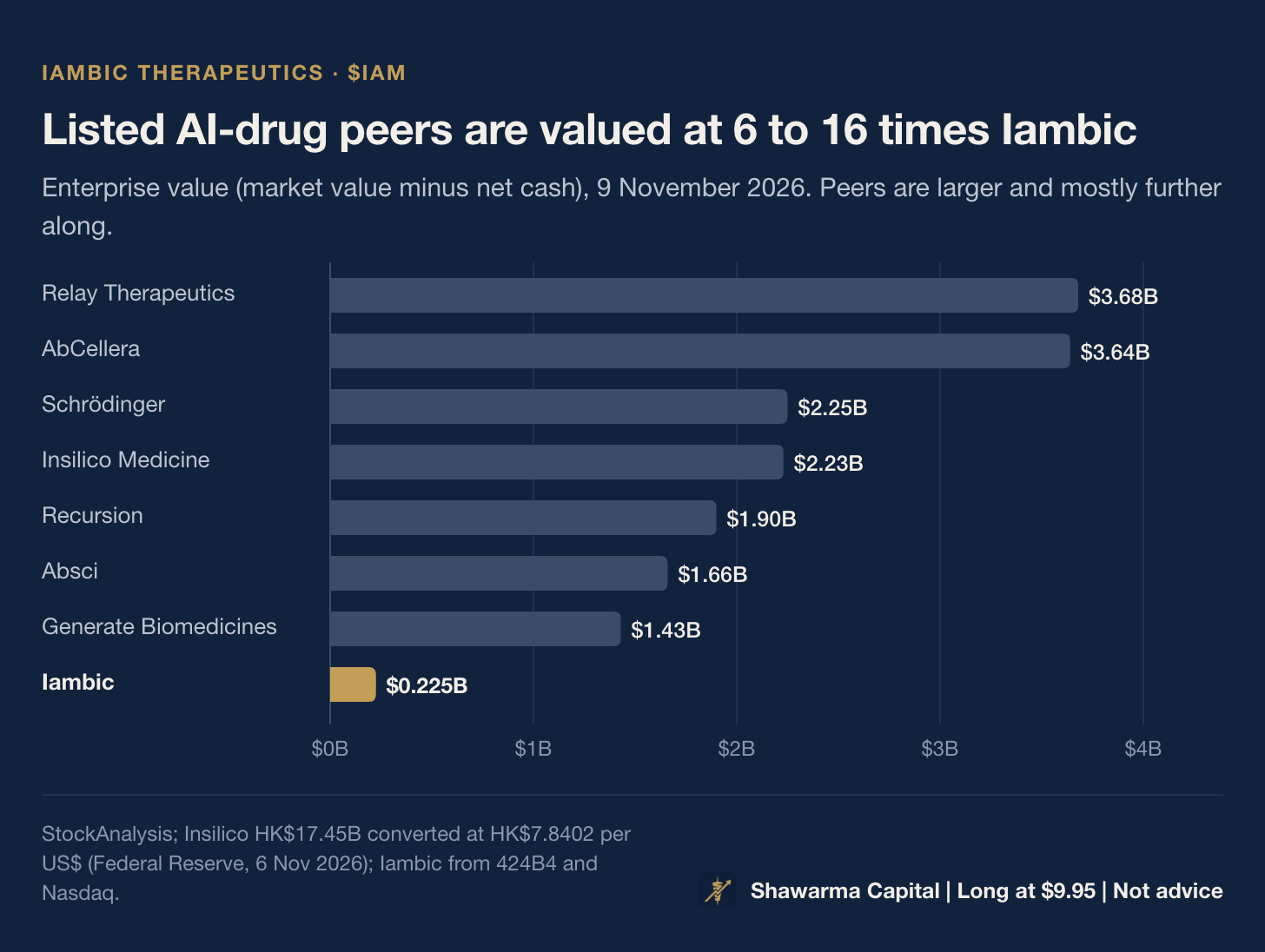
Peer values. Listed AI-drug companies have enterprise values 6 to 16 times Iambic's (table below).
Bank analysts' targets of $22 to $30 (caveats in the next section).
Time. Cash into the fourth quarter of 2028 funds every event on the calendar below, though I still expect a share sale before then (risk 12).
Iambic is valued at a fraction of every listed AI-drug peer.
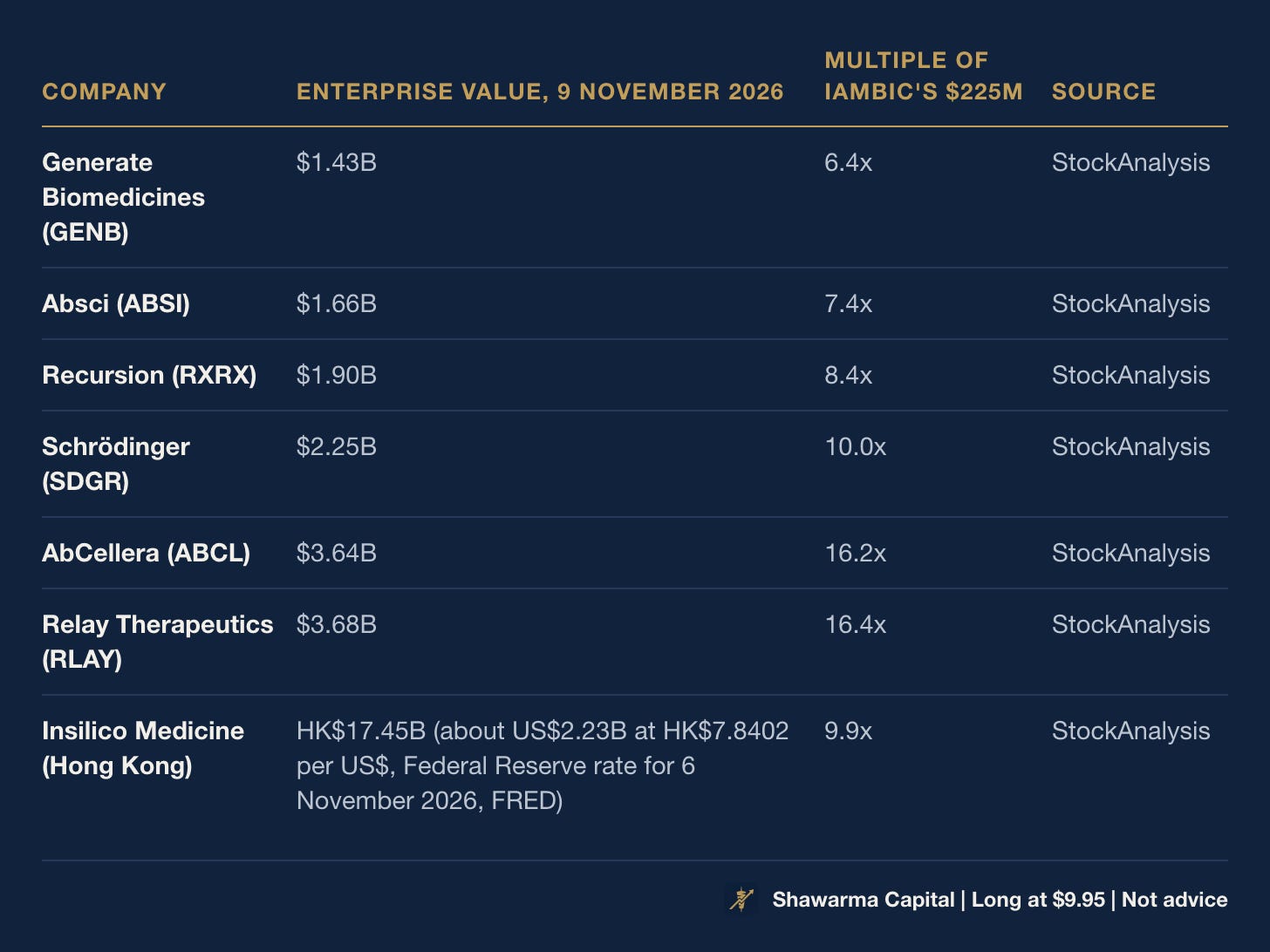
These companies are larger and mostly further along; the table shows what the market pays for the category, not Iambic's worth.
"A low EV is not the same as a margin of safety"
The cash is not a floor under the share price, because it will be spent. A margin of safety is a cushion if you are wrong, and Part 1's warning still holds. On the bear's arithmetic, cash per share falls to roughly $4.40 by the end of 2027, or about $5.30 with AbbVie's $40M, if spending rises to $130M or more a year. If the drugs fail, the cash will be largely gone when that becomes clear, and shareholders will have been asked for more in between.
So I claim no floor, only that the bet is cheap for the number of ways it can pay, with about two years of cash to test it. If the 23% confirmed rate erodes and the two INDs slip, I expect the shares to trade toward cash and then below it. I size the position for that outcome.
How do the 9 November analyst initiations frame the data?
Three banks rated IAM a buy with targets of $22 to $30, but all three helped sell the IPO. They started coverage on 9 November, which I take to be the first day the post-IPO quiet period allowed.
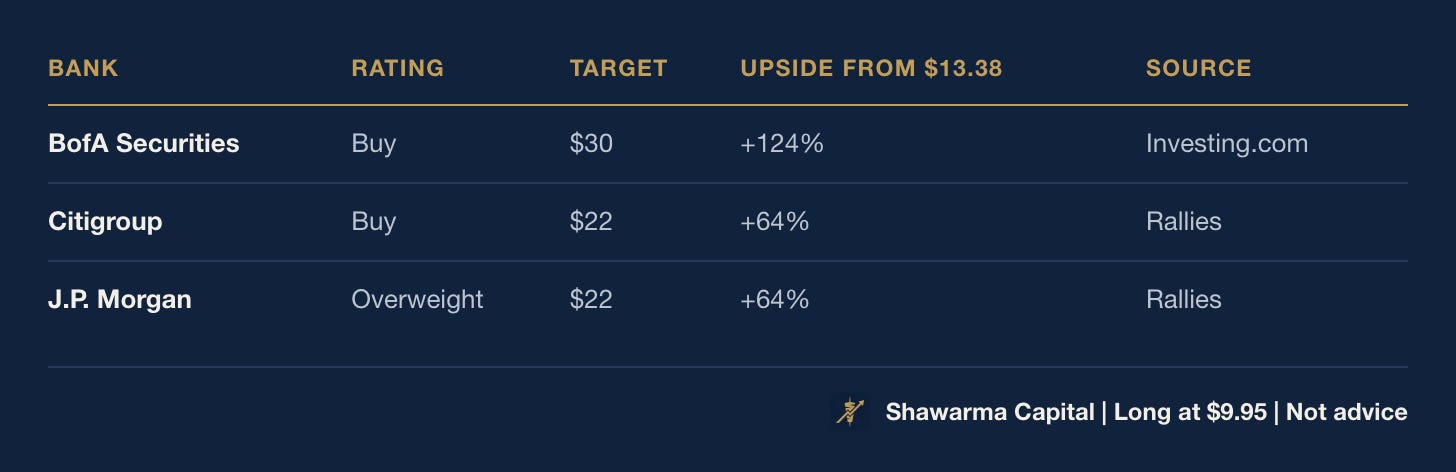
All three banks underwrote the IPO. Favourable first ratings from underwriters are the norm.
The full reports are not public, so I cannot tell whether they use the 36% or the 23% figure. Public summaries say BofA's case rests on AI-designed molecules and a discount to peers. A reported BofA figure of "$8 per share for IAM1363" appears only in a search snippet, and I could not verify it.
The targets need more than the HER2 base case. In the valuation table, $22 implies more than 100% odds on the Part 1 base case, and the $24.67 average target implies 64% on the bull case. The banks are therefore valuing the pipeline and platform, or using larger sales figures.
The useful signal is the reaction: the stock rose 31.6% on about 860,000 shares, while borrowing costs fell and trading was never halted. That points to ordinary buying, not a short squeeze (a rush by short sellers to buy back).
What could go wrong? Thirteen numbered risks
The response rate may not hold. Confirmed ORR fell from 27% (11 of 41) to 23% (12 of 53) between May and August 2026 as more patients were counted (424B4). There are no complete responses and no duration data. Regulators have refused or withdrawn drugs at 28%.
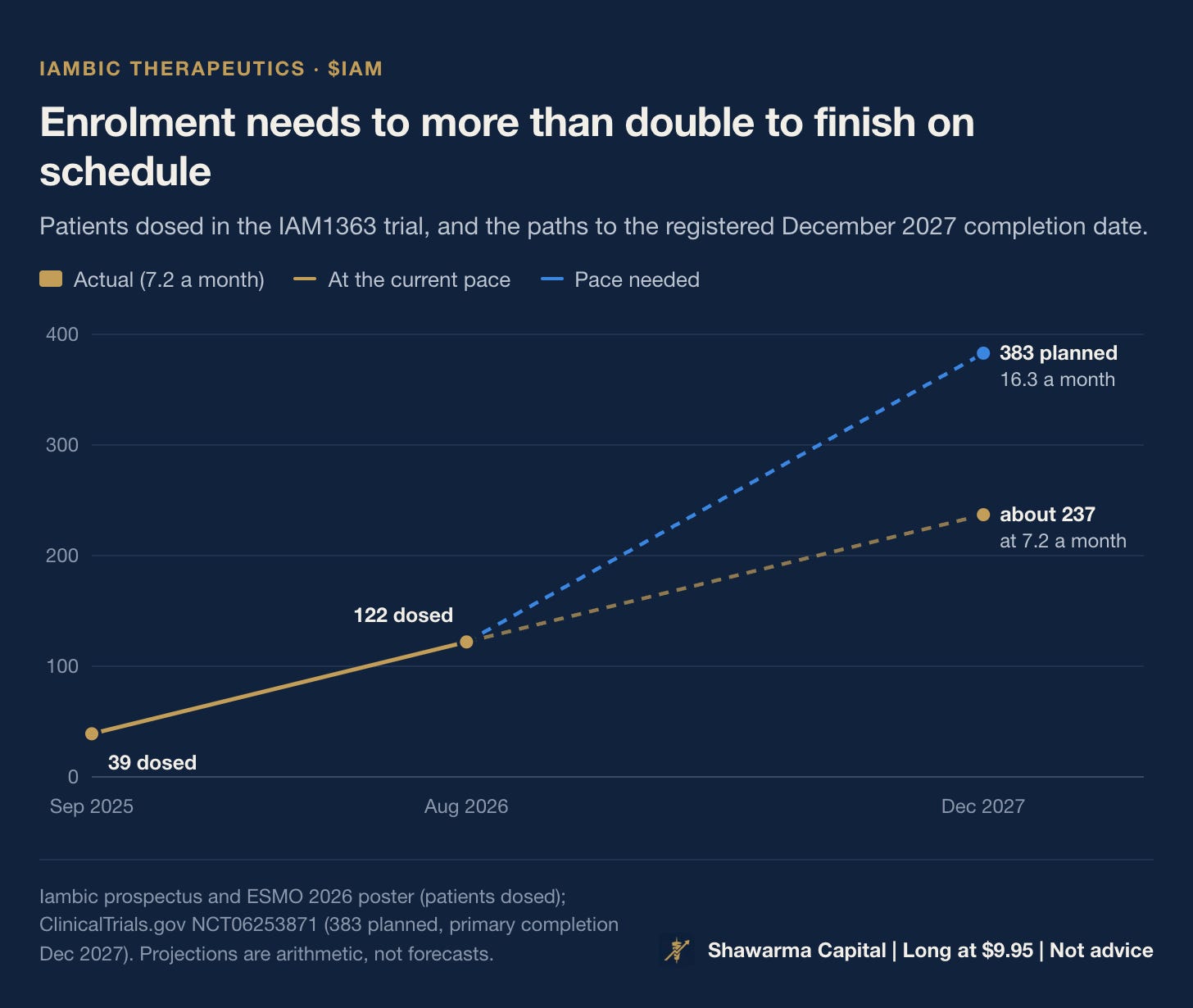
Enrolment is too slow for the stated timeline. The trial dosed 39 patients by 12 September 2025 and 122 by 31 August 2026, or 7.2 a month. Reaching the planned 383 by the registered primary completion date of December 2027 needs 16.3 a month, 2.3 times faster (ClinicalTrials.gov). Only 40 of the 122 were still on treatment at the cut.
Rivals recruit at the same hospitals. (New) Roche's BREnnA trial is open at about a dozen of IAM1363's 53 sites, and Boehringer's zongertinib trial at 13 to 15, depending on how sites are matched (NCT07413939; NCT06581432). IAM1363's lead doctor at MD Anderson is also listed on the zongertinib trial (MD Anderson, IAM1363; MD Anderson, zongertinib). As Part 1 noted, one Madrid site shows "Recruitment on Hold" on its own trial page (START).
Timelines have slipped before. In a talk posted in October 2023 the chief executive said two programmes would reach humans "in the upcoming year" (talk; auto-generated captions, not checked against audio); the second IND came in September 2026. The "mid 2028" date for a first approval-supporting readout comes from another talk (Broad Institute talk; same caveat) and appears in no filing. The prospectus says only "as early as 2027, subject to regulatory feedback" for starting a registrational trial.
Supply runs through one manufacturer, with China exposure. The prospectus says Iambic relies "on a single contract manufacturer for the drug substance" and that a "significant portion" of manufacturing is with contractors linked to China (424B4). It names WuXi AppTec for research services and calls it "at high risk" of designation under the BIOSECURE Act, a US law restricting work with listed Chinese biotech firms. The first list is due by 18 December 2026; prohibitions are not expected before about 2028, and existing contracts get five years' protection. A US court also blocked the Pentagon's separate listing of WuXi as a Chinese military company on 7 August 2026, though the BIOSECURE timetable keeps running (Greenberg Traurig).
Claims were softened between prospectus drafts. As Part 1 showed, a statement that the platform "has been thoroughly validated" was removed. (New) Also removed before the final version: "over three years faster than historically reported industry timelines"; a "100% intracranial disease control rate"; and a statement that about 41% of one group remained on treatment. Added to the business overview: "although our approach is novel and unproven" (the phrase was already in the first draft's risk factors) (first draft; second draft; 424B4). Dropping the 100% and 41% figures is substantive.
The lock-up ends on 12 April 2027. About 38.7M shares (81.7%) become sellable from 13 April, or earlier if the underwriters release them. Holders can also require the company to register up to 28.5M shares for sale (424B4). Lock-up expiries have historically cut prices by about 1.5% on average (Journal of Finance, 2001), but the same study found much larger drops at venture-backed companies, and IAM's holders are concentrated in venture funds.
(New) Pill burden. The trial capsules come in 30 mg and 120 mg strengths, taken on an empty stomach (patent application WO2025178975A1). If 120 mg stays the largest capsule, 960 mg is eight capsules a day. That is my inference; no public record shows a stronger capsule or tablet.
Patents for CDK2/4 are weak so far. Iambic has one granted US patent covering IAM1363 (plus one granted foreign patent in the same HER2 portfolio), with an estimated expiry in 2043 before any extension (424B4). (New) The European Patent Office's international search report on the first CDK2/4 patent family cited earlier publications that, on their own, may defeat novelty or inventiveness ("X" citations) against essentially all 63 claims. Two follow-on CDK applications show no national filings after their 17 July 2026 deadline (Google Patents mirrors; official file not seen). IAM-C1 rests on pending applications, and the platform has no issued patents.
Closed model weights and no outside test. No independent benchmark of NeuralPLexer3 or Enchant exists, and the headline result is not a demonstrated win (OpenReview). Published reviews of AI-discovered drugs put the Phase 1 success rate of AI-discovered drugs at 80–90% but the Phase 2 rate at about 40%, close to the industry norm (Drug Discovery Today, 2024).
(New) Staff departures. At least three named technical staff have left. Zhuoran Qiao, lead author of the original NeuralPLexer model, joined rival Chai Discovery (Chen Institute). Owen Howell, a NeuralPLexer3 author, moved on and is now at Terray Therapeutics (personal site). Together they are two of the eleven named inventors on the NeuralPLexer3 patent family (patent WO2025160309A1). Daniel Smith, listed as software director in 2022 on the leadership page of Entos (Iambic's former name), is now chief technology officer at Achira (Entos leadership page, 2022; GitHub profile).
More money will be needed. The IPO funds the start, not the end, of registrational trials. The company cannot use the fastest form of follow-on share sale (a shelf registration on Form S-3, which pre-approves future sales) until about November 2027. I expect a raise between late 2027 and early 2028. Options, share units and warrants already granted take the count to about 55M shares if all are converted (my arithmetic), and the 2026 equity plan can grow by up to 5% of that fully diluted count each year (424B4).
Partners can leave, and standard treatment is moving. All five deals can be ended without cause. Enhertu with pertuzumab was approved as the first treatment for HER2 breast cancer on 15 December 2025 (Targeted Oncology), and tucatinib was approved as maintenance after that first treatment on 7 October 2026 (ASCO Post; Pfizer Q3 2026). Future patients will reach IAM1363 after different drugs than trial patients did. Separately, a material weakness in financial controls (a flaw serious enough to risk misstated accounts) was found in 2023 and fixed by the end of 2024, and the auditor changed in September 2025 (424B4).
What is still unknown
None of the three gaps Part 1 hoped to close is closed.
Who makes the drug. No public record I found names the manufacturer. WuXi AppTec is named for research services only, so it is not necessarily the maker.
Courts. I found no litigation, and the prospectus discloses none, but several court portals blocked automated searches.
What breast-cancer doctors think. I found no public comment on IAM1363 from trial doctors or independent oncologists, and no patient discussion on the trial's public pages (Smart Patients). One trade site published a cautious read of the ESMO data, listing its limitations (Pharmacally).
Also unknown: IAM217's IND clearance, the greenshoe, short interest (shares sold short; not yet published), the IPO buyers (their quarterly holdings reports, called 13Fs, arrive by 16 February 2027) and any FDA-agreed registrational design. No special FDA designation is disclosed for any Iambic drug.
What would change my mind
Each signal below comes with the action I would take.
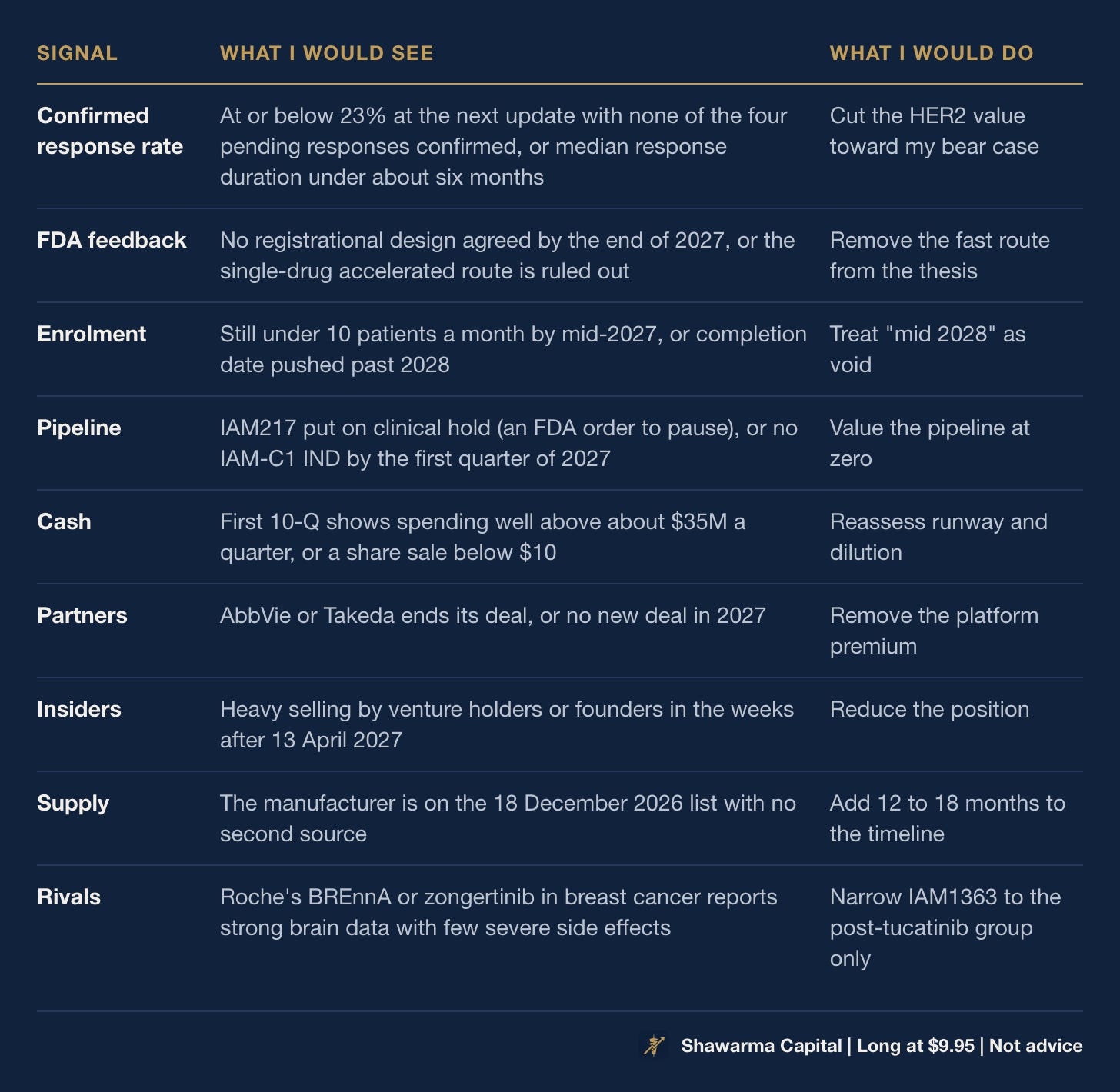
Each of these would raise my confidence: confirmation of the four pending responses (30%), a published duration figure, an FDA-agreed registrational design, IND clearance for both new drugs, a sixth partner, or open-market buying by an officer or director.
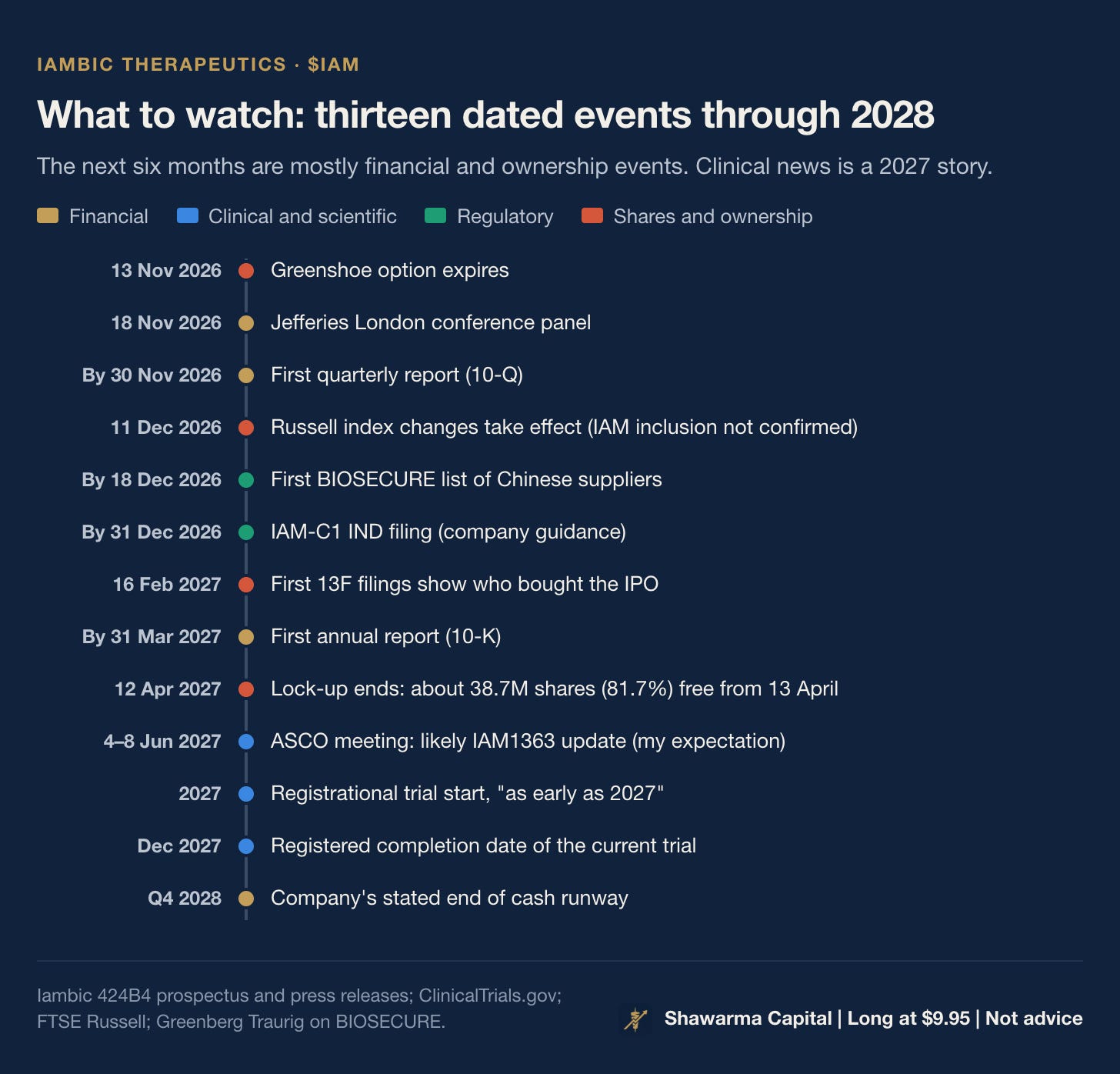
What happens next: the catalyst calendar
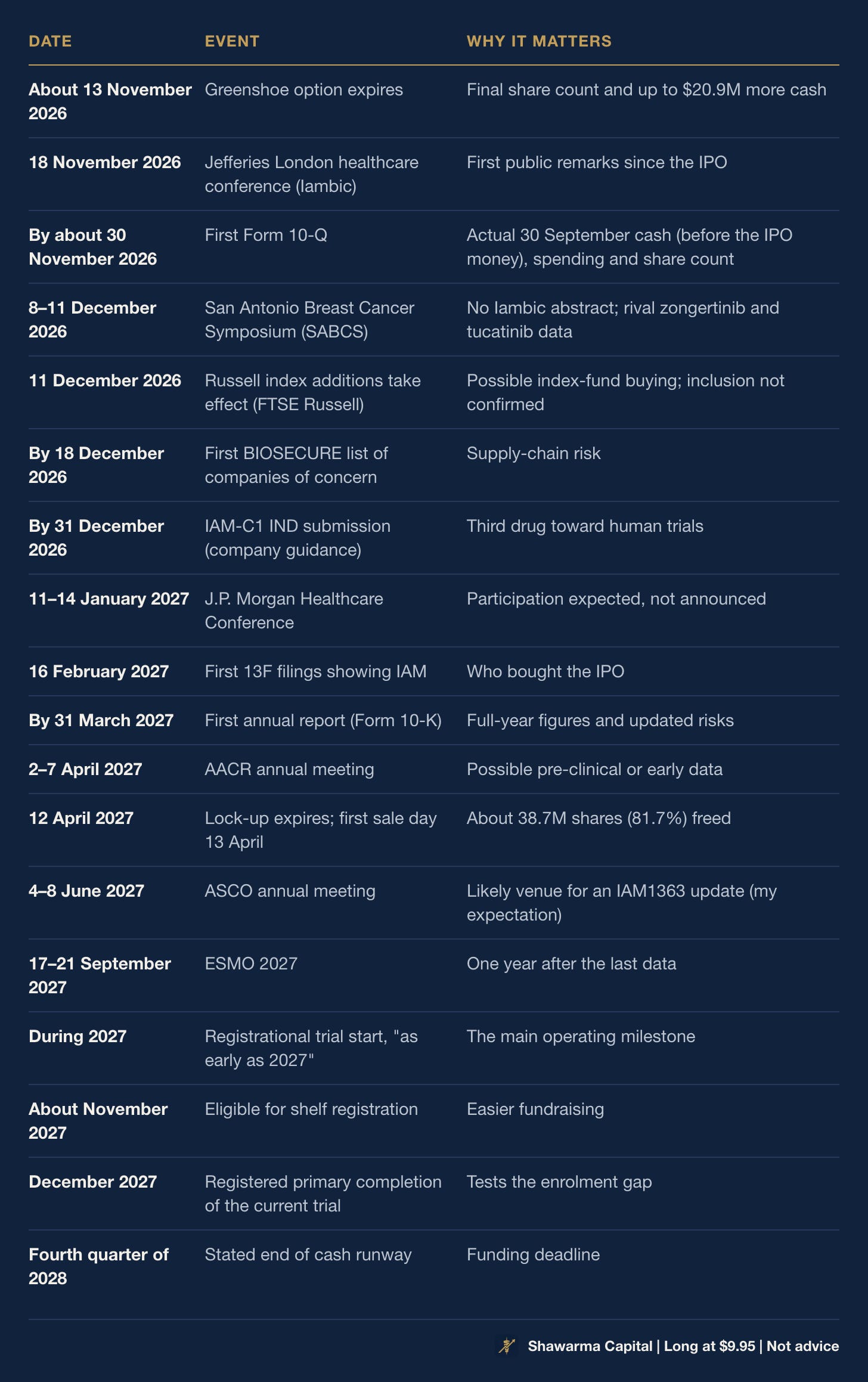
The next six months bring the first quarterly report, the IAM-C1 IND filing and the lock-up expiry.
Our view
I am long IAM because about $225M buys a working HER2 pill plus several ways to win that the simple model values at zero. The pill alone does not justify the price: on its base case, $13.38 already assumes about even odds of success, and I would not give those odds.
The rest of the case is two more drugs close to human trials, a platform five companies pay to use, AbbVie's $40M due on top of the cash, no filed contract clause that blocks a buyer, private-round prices of $16.30 to $17.14, bank targets of $22 to $30, and about two years of funded events. The pill itself shows confirmed responses in patients whose cancer had beaten the two leading HER2 drugs, with a low rate of severe side effects at the chosen dose, though most patients get diarrhoea.
The thesis also depends on a confirmed response rate that is still settling, a trial that enrols too slowly and a company that will need more money before its key result.
I bought at $9.95, when the enterprise value was about $62M and the implied base-case odds were about 15%. At $13.38 the case is thinner but, in my view, still favourable. Readers buying today are paying more than I did and should weigh that.
What this piece adds: the fall looks like IPO holders selling, not a short attack; FDA precedent makes response duration the test for the fast route; the filed contracts lack the usual takeover blocks; and the bank targets, like this thesis, need more than the HER2 base case.
Frequently asked questions
Is Iambic Therapeutics publicly traded? Yes, on Nasdaq as IAM, since an IPO priced at $16.00 on 14 October 2026 (424B4).
Does NVIDIA own part of Iambic? Yes: 1,827,692 shares, or 3.86%, after investing $25M. It does not supply Iambic's computing (424B4).
What is IAM1363's response rate? 23% confirmed (12 of 53) overall and 18% (4 of 22) in brain tumours at the 31 August 2026 cut, pooling doses of 960 mg and above; 36% and 41% counting unconfirmed responses (ESMO 2026 poster).
How much cash does Iambic have? $409.4M, or $8.64 a share, on a 30 June 2026 basis adjusted for the IPO.
When does the IAM lock-up expire? At the close on 12 April 2027. About 38.7M shares (81.7%) can be sold from 13 April, or earlier if the underwriters agree.
Is Iambic's AI better than AlphaFold 3? Not demonstrably. It scored 77.9% against 73.1% on one public test, but AlphaFold 3's score sits inside NeuralPLexer3's uncertainty range, and no outside group has tested it.
Sources and method
Public sources only: SEC filings (the prospectus, its four earlier versions and the filed partner contracts), ClinicalTrials.gov, the ESMO 2026 poster, company releases, patents, exchange and fund data, and trade press. Where sources disagreed I used the final prospectus.
Figures marked as my estimate, inference or arithmetic are not company figures; peak-sales and patient-pool estimates carry wide error. Talk quotes come from auto-generated captions. The Part 1 model is reproduced unchanged so readers can compare.
Part 1: $IAM: A 23% Confirmed Response, a Down-Round IPO and a $142 Million Enterprise Value (6 November 2026).
Not investment advice. The author holds shares of IAM as disclosed at the top.