


August 27, 2026. $MRLN closed at $3.52 today, roughly a $355 million market cap on 101 million basic shares. I am long, it is the largest position in the book, and none of what follows is investment advice. Last week, in the management call post, I told you I was flying to Quonset. This is what happened when I did.
One note before we start, because it matters: Merlin hosted this visit, and everyone I met was careful, professional, and disciplined about what a public company can and cannot say. Nobody gave me projections, timelines, financial information, or anything you cannot find in a filing. What I brought home was not information. It was calibration: the chance to check the public record against the physical reality. Every program fact, number, and quote in this piece comes from public filings, press releases, and the recorded management call previously published to subscribers. The rest is what I saw with my own eyes and heard through my own headset.
There is a specific kind of due diligence you cannot do from a terminal. I have spent five months on this company from the outside: the filings, the FAA registry, the lobbying disclosures, the flight trackers, the federal budget documents, thirteen parts of it published here. I have tracked their airplanes across two hemispheres and read their certification milestones the way other people read box scores. What I had never done, until this week, was sit inside the product while it worked.
So when the invitation came to come to Rhode Island and fly, I took it.
Quonset
To get to Merlin's flight test operation you drive onto the old Quonset Point naval air station in North Kingstown, Rhode Island, and the geography does half the storytelling before you ever reach the hangar.
This is the place that gave the Quonset hut its name. The Navy built the base in 1941, the Seabees were born here, and for a generation this stretch of Narragansett Bay was one of the busiest military airfields on the East Coast. The first thing you pass today is General Dynamics Electric Boat, where they assemble hull sections for nuclear submarines: cranes, security fencing, barge docks, the whole industrial choreography of the most complicated machines America builds. Quonset is not a tech campus with a climbing wall. It is a place where the government has been betting on hard, unforgiving engineering for eighty years, and the neighborhood tells you what category of thing is being attempted inside.
The second thing you notice, if you know what to look for, is that the Rhode Island Air National Guard's 143d Airlift Wing flies C-130Js off this same field. The airframe at the center of Merlin's defense business takes off and lands, routinely, on the other side of the fence from Merlin's hangar. Nobody staged that for my benefit. It is simply where the company chose to do its work: submarines on one side, Hercules on the other, and in between, a hangar where a software company is teaching airplanes to fly themselves.
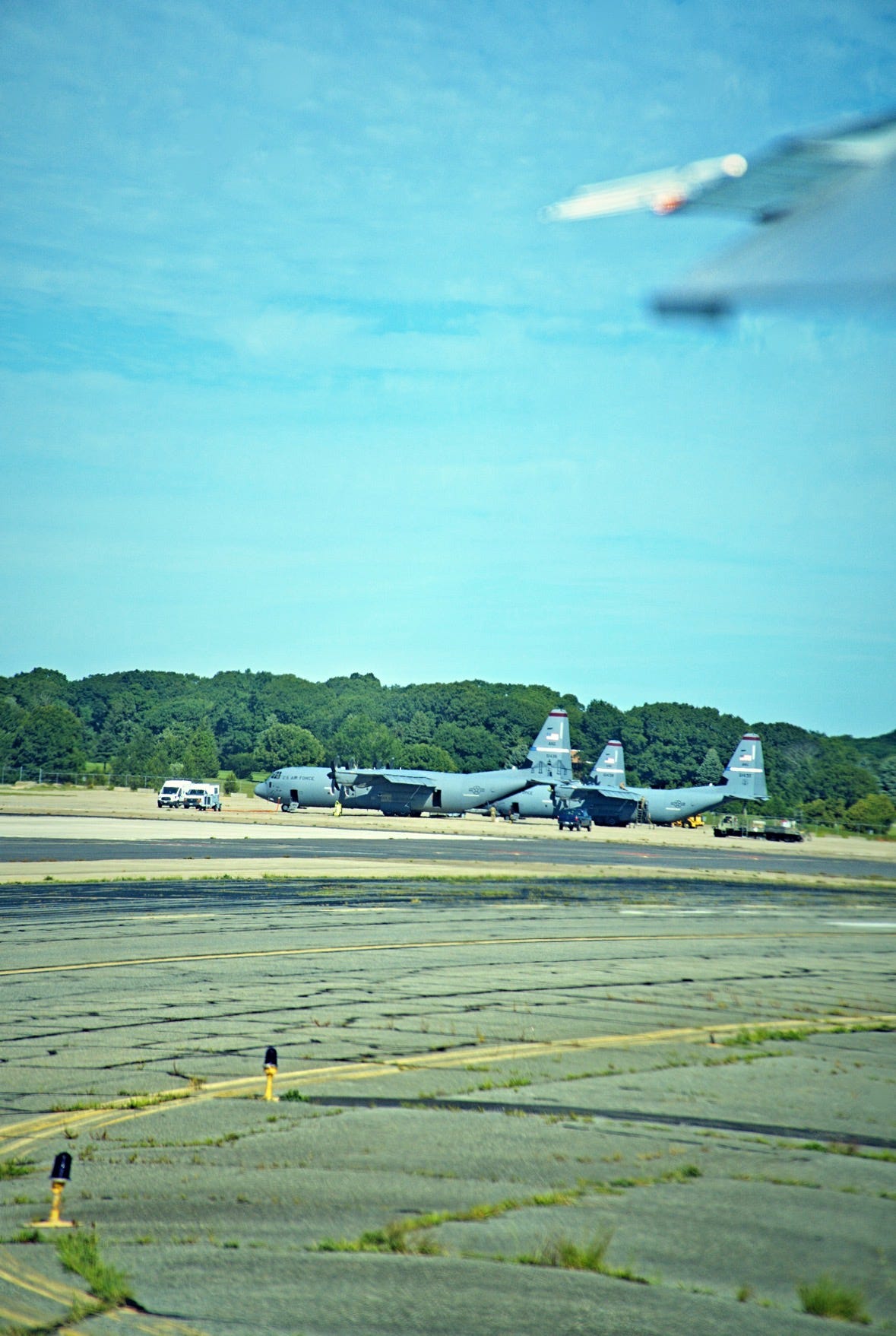
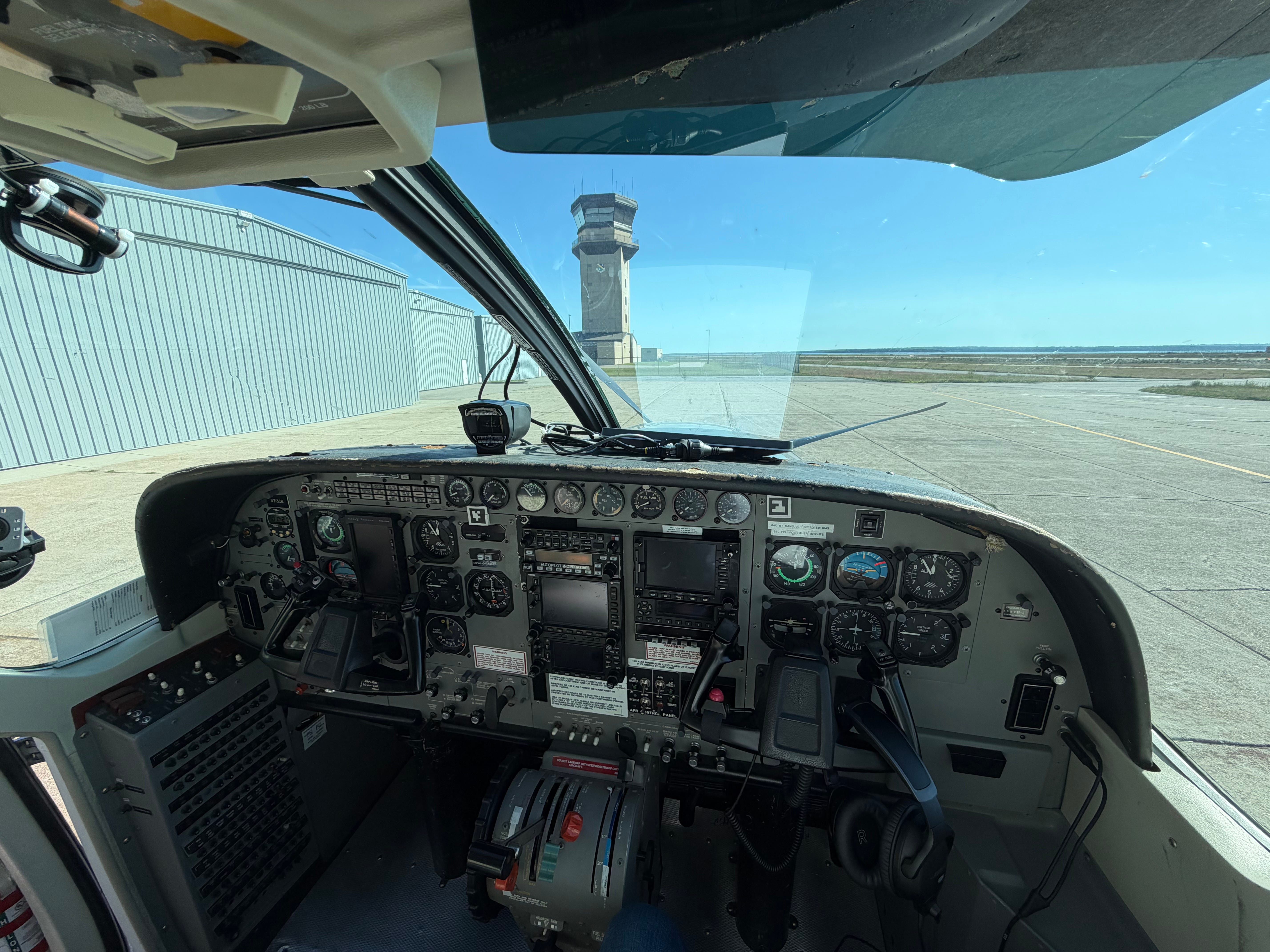
Merlin moved flight test here from Mojave in late 2024 to be near the Boston headquarters, and the hangar houses the Cessna Grand Caravans that anchor the FAA supplemental type certificate program, the civil half of this story. I parked in the hangar lot, walked in past the caution tape and the toolboxes and the aircraft in work, and the first impression was the important one: this looks exactly like what the filings say it is. A working flight test unit in the middle of a campaign. Not a showroom. Nobody had tidied the lab for company.
The room
The company put real people in front of me, not a deck. The VP of Investor Relations. Flight test staff. Another investor, a PM at a hedge fund, was visiting the same day, which tells you something about who is doing primary work on this name right now. On the management call last week, the CEO mentioned that Merlin had been extending these invitations for a while and only recently had investors started taking them up. Having now gone, I understand why the ones who do come back different.
We sat down for a pre-flight meeting and talked for a long while about the intricacies of aviation and autonomy, and I want to describe the texture of that conversation, because texture is what you fly to Rhode Island for. Nobody pitched me. The conversation kept drifting, the way conversations among competent people do, into the genuinely hard parts of the problem: what it means to put a machine in command of an aircraft in the national airspace system, how you bound a decision-maker you did not hand-write, what safety actually means when you engineer for it rather than argue about it. Everyone I met was conspicuously qualified, and everyone talked about the same thing from a different angle. The angle was never the stock. It was always the airplane.
The frame they operate under is the one the CEO has laid out publicly, and the consistency between the executive suite and the hangar floor is itself a data point, because message discipline that deep is rarer than you would think. Aviation has had assisted autonomy for decades: autopilots, autothrottles, autoland. Each of those is a tool a pilot wields. What Merlin is building is the jump from assistance to a full stack pilot, a system that owns the mission from takeoff through touchdown, perceives, decides, communicates, and acts, with the human moving up one level, to supervision and authorization. Matt George has publicly described Merlin Pilot as a student pilot: you teach it the airplane, then you expand what it is trusted to do, gradually, gate by gate. Not a feature. A crew member.
The man in the left seat
The pilot assigned to our demo flight is a former military C-130 pilot who now flies as a test pilot for Merlin. Sit with that for a second, because the resume alone carries information. The program Merlin is trying to win is crewing down the C-130J for Special Operations Command, from two pilots to one. The person in the left seat of my demo has flown that mission the old way, with two humans up front, and now spends his working life supervising the software designed to hand one of those seats to a machine.
But the resume was not the striking part. The striking part was the conviction.
Understand what a test pilot is. A test pilot is a professional skeptic. The entire job, the culture, the training, is organized around distrust: fly the machine to the edges of what it claims it can do, find where the claims break, write it up, do it again. Test pilots do not gush. They are the immune system of an aviation company. So when I sat across from one before the flight and listened to him talk about Merlin Pilot, what I was listening for was hedges, and what I heard instead was a man who has watched this system through hundreds of hours of the least charitable scrutiny available and come out the other side convinced. He talked about safety the way career aviators talk about safety, which is to say constantly, unprompted, from every direction: the discipline of the test program, the layers between an idea and an action, what the system will simply refuse to do. Not marketing safety. Procedural safety. The kind with paperwork.
His conviction reads even better against the public backdrop. The CEO has said publicly that the vast majority of aviation accidents remain the direct result of human error, and that safety is the first thing autonomy changes. A machine does not get tired on the sixth leg of the day. It does not get distracted, or rushed, or complacent, and it flies the aircraft the same way at 2 a.m. as at 2 p.m. The men and women who have spent careers watching human factors erode airmanship are precisely the people you would expect to feel strongest about that, and, at least in the sample I met, they do. When people ask me what conviction inside a company looks like, it is not the founder's conviction that impresses me. Founders are paid to believe. It is the test pilot's.
The airplane is a laboratory
Then we walked out to the ramp and inspected the aircraft, and the romance got replaced by something better, which is evidence.
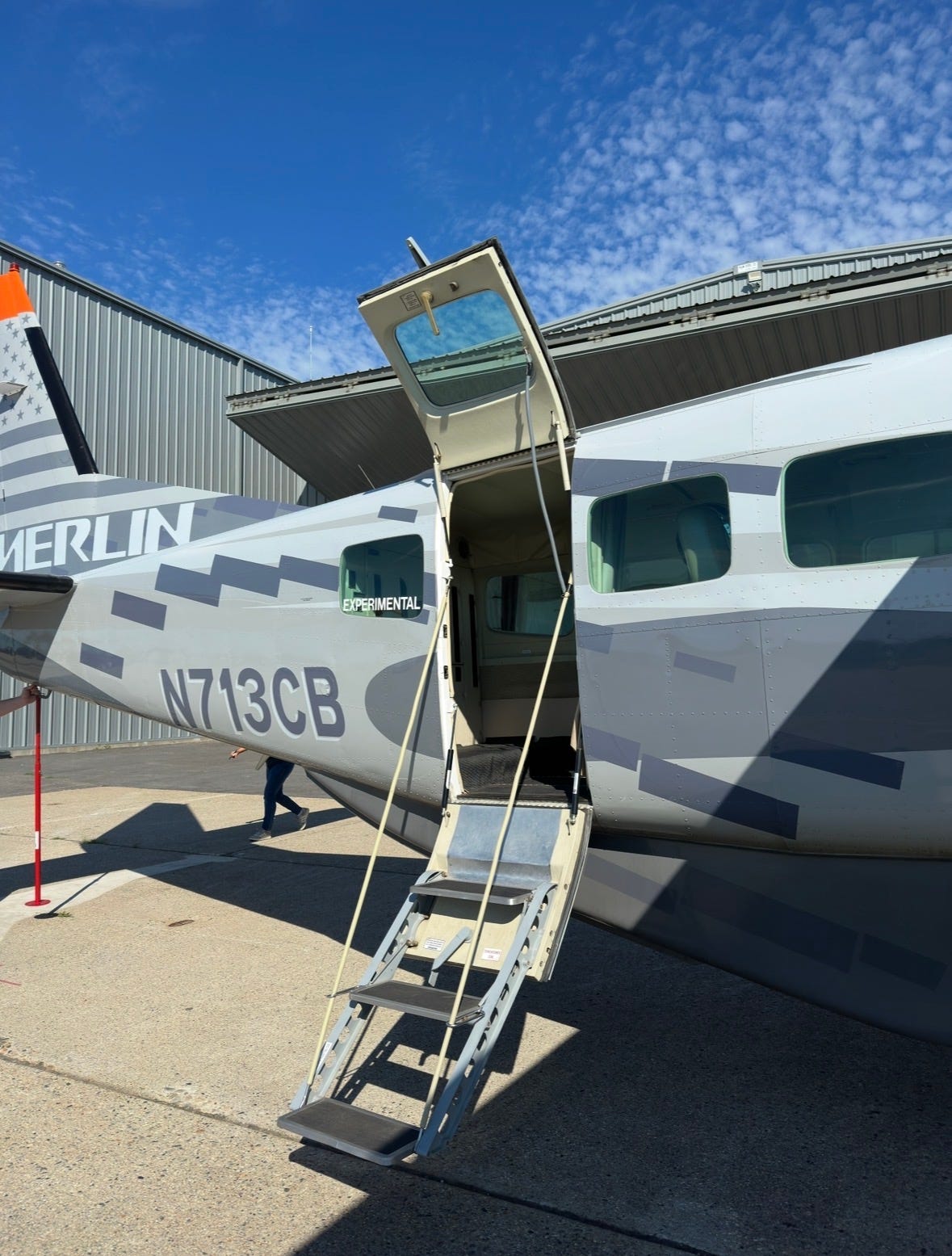
Start with the airplane itself, because the choice of airframe is strategy. The Cessna Grand Caravan is arguably the most consequential utility aircraft of the last forty years. FedEx funded part of its development in the 1980s because it wanted a cheap, rugged feeder for packages; more than 3,000 of the Caravan family have been delivered since; and its PT6A turbine is close to the most trusted engine in aviation. Caravans haul cargo, skydivers, mail, and medicine on every continent. It is the world's workhorse, which is exactly why you would pick it as the first certification target: certify autonomy on the airplane that already does the unglamorous flying of the global economy, and the market for the resulting product is not hypothetical. It is FedEx feeders and island freight runs and every operation that runs these airframes hard, every day, at thin margins.
Now the part that carries more of the thesis than it first appears to: none of Merlin's aircraft are fly-by-wire. A Caravan, a King Air, a C-130J: these are cable-and-hydraulics machines designed decades before anyone imagined software in the loop. The integration process, as the CEO has described it publicly, is to retrofit servos and actuators onto the airplane, then "characterize" it, flying a set of maneuvers with the company's test pilots to teach Merlin Pilot how this specific airframe behaves, then gradually expand the envelope of what the system is allowed to do. Why that matters commercially: the world's cargo and military fleets are not fly-by-wire either. A company that can only automate new airplanes has a market measured in future deliveries. A company that can retrofit autonomy onto the existing fleet has the thousands of aircraft already out there. That is the entire Condor thesis, and it starts with servo brackets.
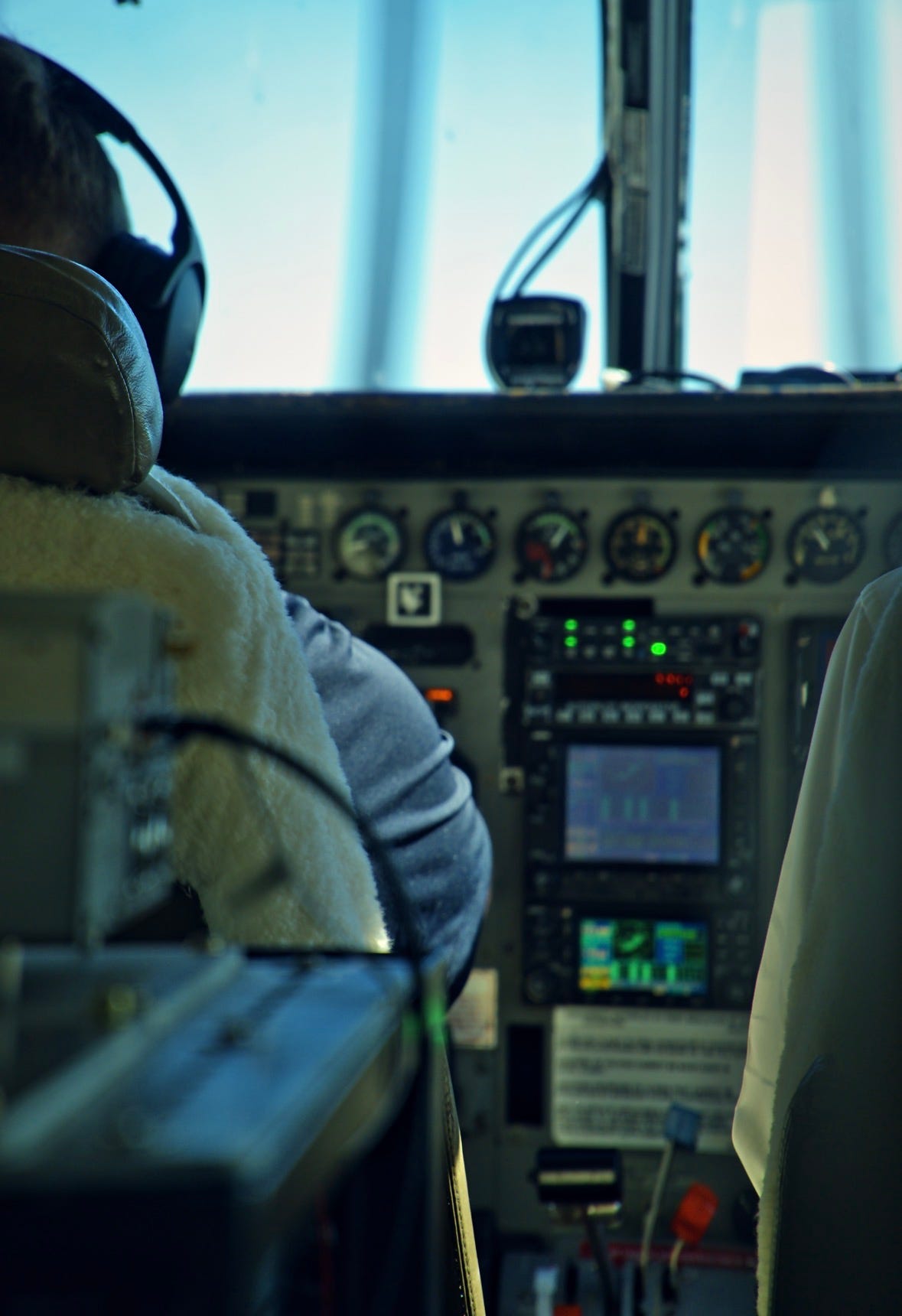
You see all of it in the cabin. A rack of flight test electronics with dozens of thick cables running forward, the visible circulatory system between the compute and the airplane's nerves. Test instrumentation where seats would be. And in the back, the flight test engineer's station: a second joystick, a monitor, and the tablet that runs the show.
The tablet
Our flight test engineer walked me through the backend before we ever turned the propeller, and I want to be precise about what I saw, because no press release conveys it.
The tablet is the mission. You create waypoints and place them in three dimensions, altitude included, building a route the way you would sketch one on a map that happens to be real. The aircraft flies it with complete autonomy. You can edit the plan in flight, and the aircraft accepts the new routing the moment it is authorized; there is no perceptible gap between permission and execution.
Restricted airspace renders as hard boundaries the system will not enter. Not "is trained to avoid." Will not. And the same philosophy runs all the way down the stack: the servos and actuators themselves have bounded authority, and the intelligent layer works through those bounds rather than around them. Everything the autonomy wants to do is checked against deterministic constraints before it becomes motion. If you have spent any time thinking about how a learning system gets certified for aviation, you will recognize the architecture: put the clever part inside a cage the regulator can inspect. The cage is the product as much as the cleverness is.
This is not a marketing abstraction, and here is the receipt. The two components Merlin announced it had pushed through Stage of Involvement 3 with the Civil Aviation Authority of New Zealand this month, in the joint validation program with the FAA, are exactly the two things I watched work: the Flight Control Computer and the Automated Communication System. The certification paperwork and the demo describe the same machine. That coherence, filings matching hangar, is precisely what you fly to Rhode Island to check, and it checked.
On the same screen you can watch the communication side of the brain: the ATC comms stream and the language processing pipeline, every stage of the loop from radio call to understood instruction to proposed action, laid out where an engineer can audit it. And woven through the whole walkthrough, unprompted, was redundancy: software redundancy, power redundancy, hardware redundancy. This is a company that talks like an avionics house, not like a software startup that happens to own airplanes.
The flight
We boarded, briefed, and lined up. The pilot authorized the departure. Then Merlin Pilot flew the airplane.
Not "assisted." Not "mostly." The system advanced through the takeoff, lifted off, climbed, and flew the waypoint plan. We changed the route mid-flight from the tablet and the aircraft took up the new plan instantly. It stayed inside every boundary and followed every rule, the entire time, with the two humans up front doing exactly what the architecture says they should be doing: supervising, and authorizing.
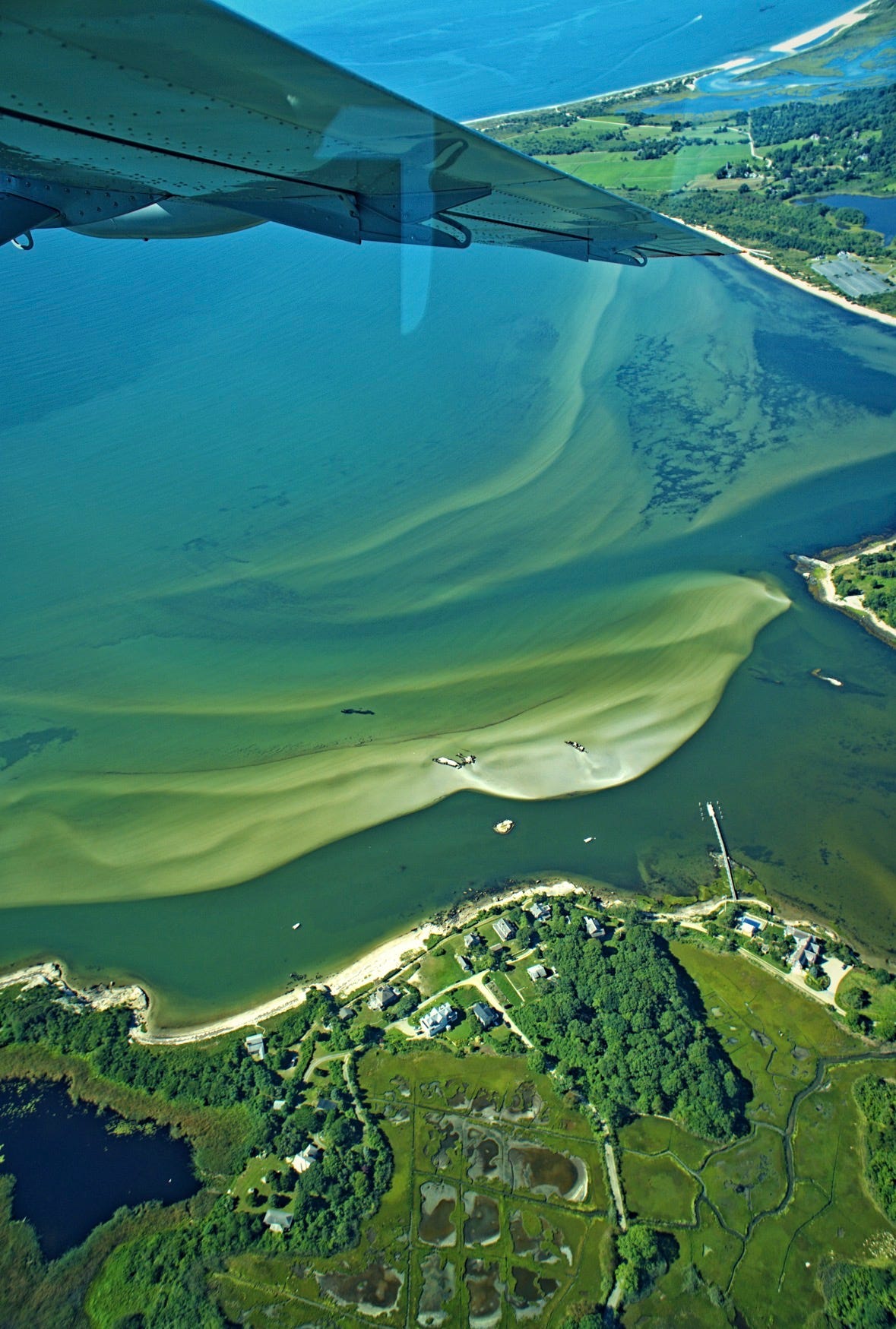
Somewhere in cruise came the moment I will be telling people about for years. Through my headset I heard a transmission go out to air traffic control, and the voice did not belong to anyone in the airplane. It was Merlin Pilot on the radio, working its own frequency, in a synthetic voice with, I have to report, genuine personality. There is something permanently mind-bending about listening to the national airspace system talk to a piece of software as a peer, and the controller on the other end not caring. This is the Automated Communication System, the same component that just cleared SOI-3: per the company's own public materials, it interprets spoken ATC instructions and converts headings, altitudes, and airspeeds into commands for the flight control system, and it reads back like any other airplane on the frequency. Reading that in a certification announcement is one thing. Hearing it key up in your headset at altitude is another.
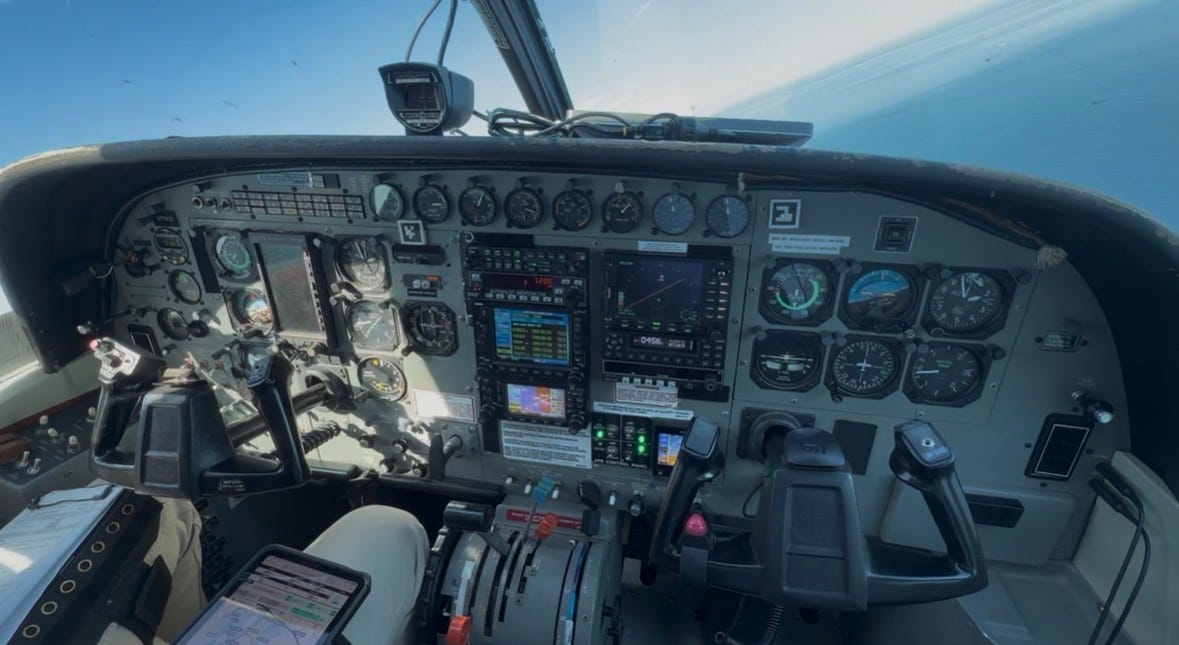
The interface runs both directions. I was shown how a human can speak to Merlin Pilot and authorize override commands by voice, and the system will execute them if, and only if, the request fits inside its bounds. The envelope is the constitution. Everything, including the humans, operates within it.

And then, at the end of the mission, the system flew the approach and landed. No manual pilot input, from the start of the journey to the rollout. The flare was judged, the touchdown was smoother than most of the human landings I have logged as an airline passenger, and the airplane tracked the centerline like it was on a rail. Five weeks earlier, this same company flew a Caravan onto Runway 27 at EAA AirVenture Oshkosh, hands off all the way to the ground in front of the largest aviation crowd on the planet, the first autonomous landing of a conventional fixed-wing aircraft in the show's fifty-plus-year history. On our call, the CEO was asked why he would take that risk in public, and his answer was that there is a world where you do this in private, and "this is not how we operate." Having now sat behind the system while it worked a real frequency in real airspace, I believe him. The Oshkosh landing was not a stunt. It was the routine, performed in front of witnesses.
What a demo proves, and what it cannot
Here is where I put the analyst hat back on, because I am aware of the failure mode where someone gets one good demo and comes home writing a fan account.
A demo proves the system exists, works end to end in live airspace, and is mature enough that the company will put outside investors in the cabin as a matter of routine. In this sector that is genuinely rare; most autonomy stories are rendered videos and roadmap slides. But a demo is not certification, and certification is the entire civil ballgame. So let me lay the hard numbers next to the experience, because both are true at once.
Merlin's Q2 10-Q is on file as of August 14. Revenue for the quarter was $2.19 million, down 29 percent from the same quarter last year, a fact the sequential bulls skip because it rose from Q1. The revenue that exists today is defense services revenue, and certification-gated commercial revenue is still zero, exactly as the filings say it should be at this stage. Meanwhile the company is spending roughly $30 million a quarter across R&D and G&A to build the thing I flew with. What funds the gap is the balance sheet: $183.5 million in cash and short-term investments as of June 30, no debt, which at the current burn is runway into 2028 without asking anyone for money. The headline net loss figure includes a large non-cash deemed dividend from the preferred repricing; read the cash flow statement, not the EPS line.
Against that spend, the program stack as it stands, all public record:
USSOCOM C-130J autonomy, sole prime. Critical Design Review complete June 4. Integration planning underway. The next task order is the catalyst.
KC-135 air refueling. Teamed with GE, building on the company's prior Project Metis work. Roughly 300 tankers in the active fleet, with airframes older than the pilots flying them.
FAA STC program, Cessna Grand Caravan. The flight test campaign at Quonset. The airplane I flew.
NZ CAA and FAA joint validation. SOI-3 complete August 6 for the Flight Control Computer and the Automated Communication System. Commercial service target in New Zealand 2027, confirmed publicly.
Commercial cargo, the Condor thesis. IAI and WorldStar partnerships; IAI is one of the largest passenger-to-freighter converters in the world, and the addressable fleet is measured in thousands of airframes.
SHIELD. Classified R&D. Publicly characterized only as "interoperable collaborative autonomy."
Three things in that stack deserve emphasis after the visit.
First, the C-130J program is scoped more modestly, and therefore more achievably, than most people model. In the CEO's own words from our call: "don't forget our contract in our program, the C-130J, is to go from two pilots down to one." Not unmanned. Reduced crew. The human stays, which means the human-machine interface is the product, and the CEO has been candid publicly that this interface, the autonomy and the human pilot sitting together in one flight deck, was harder than expected and has "now turned into a deep competitive moat." After a day inside that interface, watching authorization flow from human to machine and back with zero friction, I understand why he calls the handoff the moat rather than the model.
Second, the certification building blocks are designed to be portable. SOI-3 was not a one-program milestone; the stated point is to bring foundational building blocks through the initial certification gates and then apply them across programs, the existing ones and the future ones. And the fleet strategy matches: the stated short-term goal is every aircraft in the fleet running the same technical capabilities and the same version of the software. The same brain on many airplanes. The system I flew behind is not a Caravan product. It is the product, wearing a Caravan.
Third, the catalyst is defined, by the company, on the record: when a new task order or expansion is announced, that is when the integration plan and the contract vehicle get laid out. Asked directly on our call whether the schedule was held up by Merlin, a subcontractor, aircraft availability, or SOCOM, the answer was flat: "No, I don't think there's a holdup." That denial is dated and on the record. The program sits post-CDR, in the vendor-and-partner assembly phase that precedes metal touching metal, under a $105 million ceiling IDIQ. The task order is the event this stock is waiting for, and when it comes, it arrives bundled with the plan.
One more macro point, because the demo made it concrete. Boeing's own industry outlook calls for roughly 660,000 new pilots worldwide over the next twenty years, against a training pipeline that everyone in the industry knows cannot produce them. The value proposition I watched at Quonset does not require replacing pilots to be worth money. Reduced crew workload, machine-disciplined fuel management, safety layers that never fatigue: these are line items on an operator's income statement long before any regulator changes a crew requirement. The pilot shortage is not a threat to this product. It is the demand curve.
What would make me wrong
I own this name, so the least I can do is state the other side plainly.
The structure is complex: a large convertible preferred stack with a 12 percent payment-in-kind dividend and a $5.00 conversion floor, which caps the death-spiral scenario but means the carry compounds quietly while the common waits. There is a lockup unlock in mid-September. Short interest at the last settlement sat near 90 percent of the float; the shorts and the index funds that arrived this summer cannot both be right about what happens next month. Reported revenue is going the wrong direction while G&A steps up. And the catalyst is a government schedule, which is to say, not a schedule. If the wait runs long, the tape will not be patient, and the preferred clock does not stop ticking while everyone waits.
Nothing I saw in Rhode Island refutes any of that. Hangars do not answer capital structure questions. What the visit answered is the question underneath all the others, the one that determines whether the rest is worth arguing about: is the product real, is it as far along as the public record claims, and are the people building it the kind who finish. The answers I brought home are yes, further than I expected, and I believe so.
The kicker
There is an old line in aerospace circles that, as flight control problems go, a cruise missile is just an airplane with somewhere to be. Engineers have trusted machines to fly themselves on one-way missions for half a century. What I watched at Quonset is the other half of that problem, the half that took fifty more years because it is harder: an aircraft that flies itself and asks permission, stays inside its boundaries, reads back its clearances in a voice with a sense of humor, and lands smoothly, gently, with investors in the back.
The submarines next door take a decade to build and the country pays what they cost, because some capabilities are not optional. Across the field sit the C-130s. In between, in a hangar with caution tape on the floor, a voice that is not a person is working the frequency.
Disclosure: Long MRLN, largest position in the book. This piece describes a company-hosted facility visit and demonstration flight. It contains no material non-public information. Conversations during the visit are characterized as my personal impressions only; no one at the company provided projections, financial information, timelines, or any information beyond the public record, and no statement in this piece should be read as made by or attributable to the company or its personnel except where drawn from published materials. All program facts, figures, and quotations come from public filings, company press releases, and the recorded management call previously published to subscribers. Nothing here is investment advice. Do your own work, and if you get the chance, go fly.
References
Merlin, Inc. Form 10-Q for the quarter ended June 30, 2026, filed August 14, 2026, SEC EDGAR, CIK 0002028707
Merlin, Inc. Form 8-K and Q2 earnings release, August 13, 2026
Merlin press release, "Merlin Completes Autonomous Landing at EAA AirVenture Oshkosh," July 20, 2026
Merlin press release, "Merlin Achieves Next Stage in Certification of Its Autonomous Flight Technology" (SOI-3, CAANZ), August 6, 2026
Merlin press release, "Merlin Successfully Completes Critical Design Review for C-130J Autonomy Program with USSOCOM," June 4, 2026
Merlin press release, Quonset State Airport flight test operations announcement
USSOCOM C-130J autonomy IDIQ, $105M ceiling, FPDS / USAspending
Shawarma Capital, "$MRLN: What Management Actually Said," August 21, 2026
Textron Aviation, 3,000th Cessna Caravan family delivery announcement
Boeing Pilot and Technician Outlook 2025 to 2044
Nasdaq MRLN quote and short interest data, August 27, 2026
PS. Obviously, this is one of the key reports in the whole series.
From an investor standpoint, thank you for including the note about the hedge fund PM and the similar visitors; useful corroborating information.
Good report. Valuable honesty and clarity. You said just enough, with no fluff. Keep up the good work.